
Basement drainage systems in Green Bay
Intercept, carry, lift, discharge. In Green Bay it is almost always the fourth step that fails — a line that freezes in March, or one that returns the water to the clay it just left.
Who handles basement drainage systems in Green Bay, WI?
Green Bay Basements designs and installs complete basement drainage systems in Green Bay — interception at the footing, conveyance to a sealed sump, correctly sized pumping, and discharge that meets City Utilities rules. Call (920) 545-4548.
- Typical cost: $5,000–$15,000 in Brown County
- Soil: Kewaunee-Manawa-Poygan — silt over 5–20 ft of red lake clay, poor drainage
- Frost depth: 48" — footings and discharge lines must sit below it
- Code: Wisconsin Uniform Dwelling Code (SPS 320-325), administered by the Department of Safety and Professional Services
- Service area: Green Bay and 9 surrounding counties, 45-mile radius
The four parts
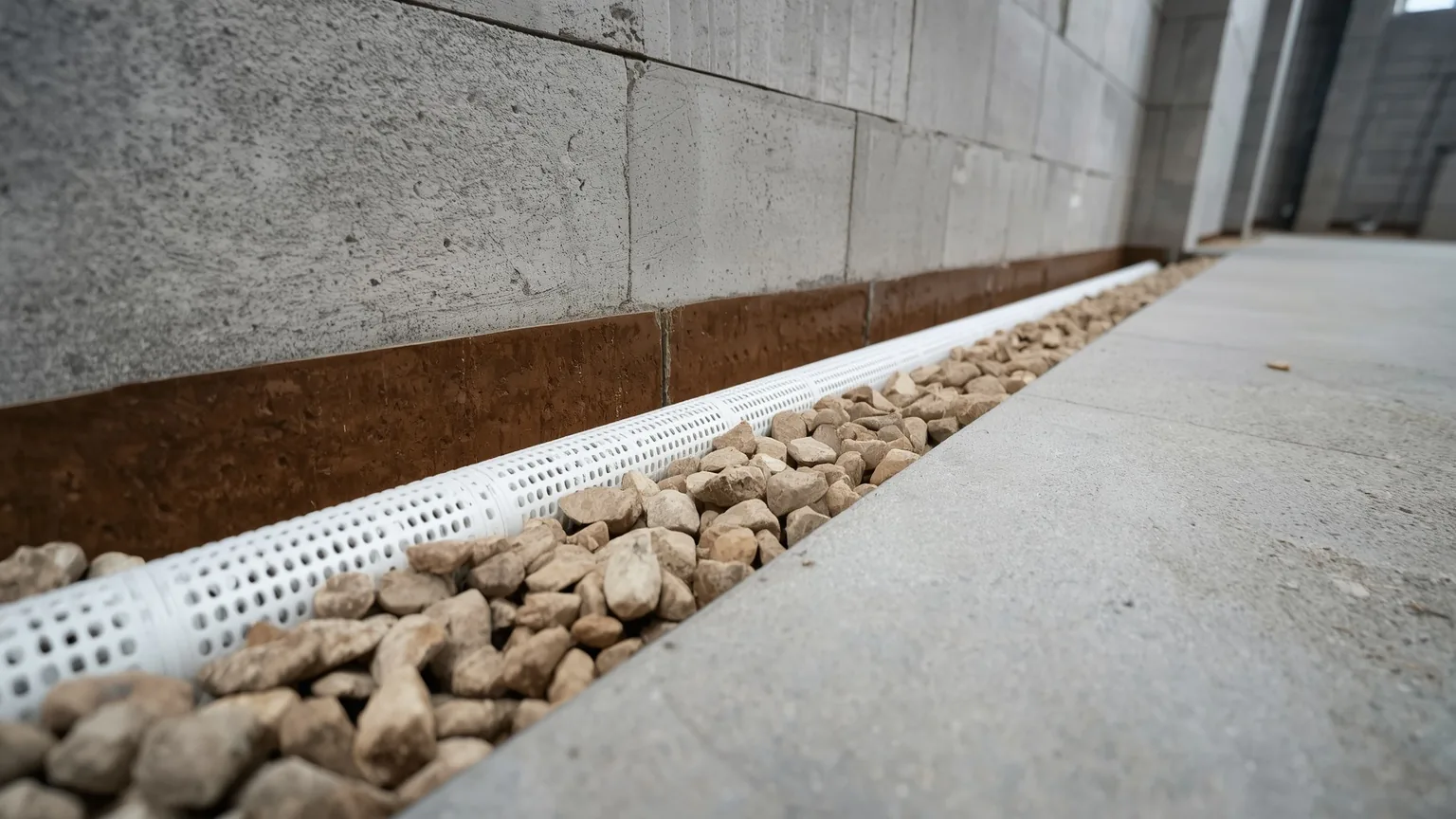
Interception, at the footing where water arrives, or at a curtain drain uphill of the house. Conveyance, the perforated pipe in washed stone that carries it — SPS 321.17 sets the minimum as 3-inch inside diameter on 2 inches of aggregate with 12 inches of cover. Collection, the sealed sump basin where the perimeter converges. And discharge, the line that takes it away.
A system is only as good as its weakest part, and in Brown County it is almost always the fourth. Perfect interception and conveyance feeding a discharge line that freezes in March, or that dumps three feet from the foundation onto clay that cannot absorb it, produces a basement that floods anyway.
Interior and exterior together
Interior and exterior systems are not competitors — they intercept at different points. Exterior work keeps water out of the wall; interior work catches what gets past. On a badly loaded lot, particularly on the Bellevue and Allouez side where water tracks laterally along shallow dolomite from uphill, both can be justified.
For most Green Bay homes, though, the honest sequence is: fix the surface first, then interior drainage, then exterior only if the wall itself demands it. Regrading and downspout extension are cheap and resolve a meaningful share of complaints. Skipping straight to the most expensive intervention is common and rarely necessary.
Why Brown County soil drives this
Brown County sits on the Kewaunee-Manawa-Poygan soil association — a thin silty cap over calcareous red clay laid down as lake sediment by Glacial Lake Oshkosh and the Green Bay Lobe. That red clay runs roughly 5 to 20 feet thick across most of the county and is among the least permeable material a foundation can be built into.
The Manawa and Poygan members of that association are rated somewhat poorly and poorly drained — they hold water near the surface instead of passing it down, so a wet spring loads the outside of a foundation wall for weeks at a time rather than days. A saturated clay backfill can exert well over 1,000 lb of lateral force per linear foot against a block wall — enough to bow an 8-inch wall inward with no visible cause outside.
The Fox River mouth and the bay shore keep the water table shallow across the lower East and West sides, and the flat lake plain gives water nowhere to run once the clay above it has taken all it can hold. In the older core neighborhoods the problem compounds — green bay's older neighborhoods — astor, whitney park, navarino, olde north — are dominated by pre-1940 housing on block or rubble foundations built before drain tile was ever required.
Basement Drainage Systems questions
How is a drainage system different from waterproofing?
Waterproofing is the goal; a drainage system is the usual means. In practice "waterproofing" gets used for anything that stops water, including coatings that do not work on saturated clay. A drainage system specifically intercepts water and routes it away, which is what actually holds up here — ask which one a quote is describing.
Can part of the basement be done rather than the whole perimeter?
Yes, and it is often the right call. If water only ever appears on one wall and the inspection confirms a single entry point, a partial run costs far less than a full perimeter. The risk is that relieving pressure on one wall can reveal a second weak point elsewhere — a good contractor tells you that before the work rather than after.
What maintenance does a drainage system need?
Very little, which is why it is worth doing right. Test the pump quarterly by pouring a bucket into the basin. Check the discharge outlet before winter and again during the thaw — an iced or buried outlet is the single most common failure here. Replace the pump on age at seven to ten years rather than waiting for it to fail in April.
Related drainage services
Sump Pump Installation
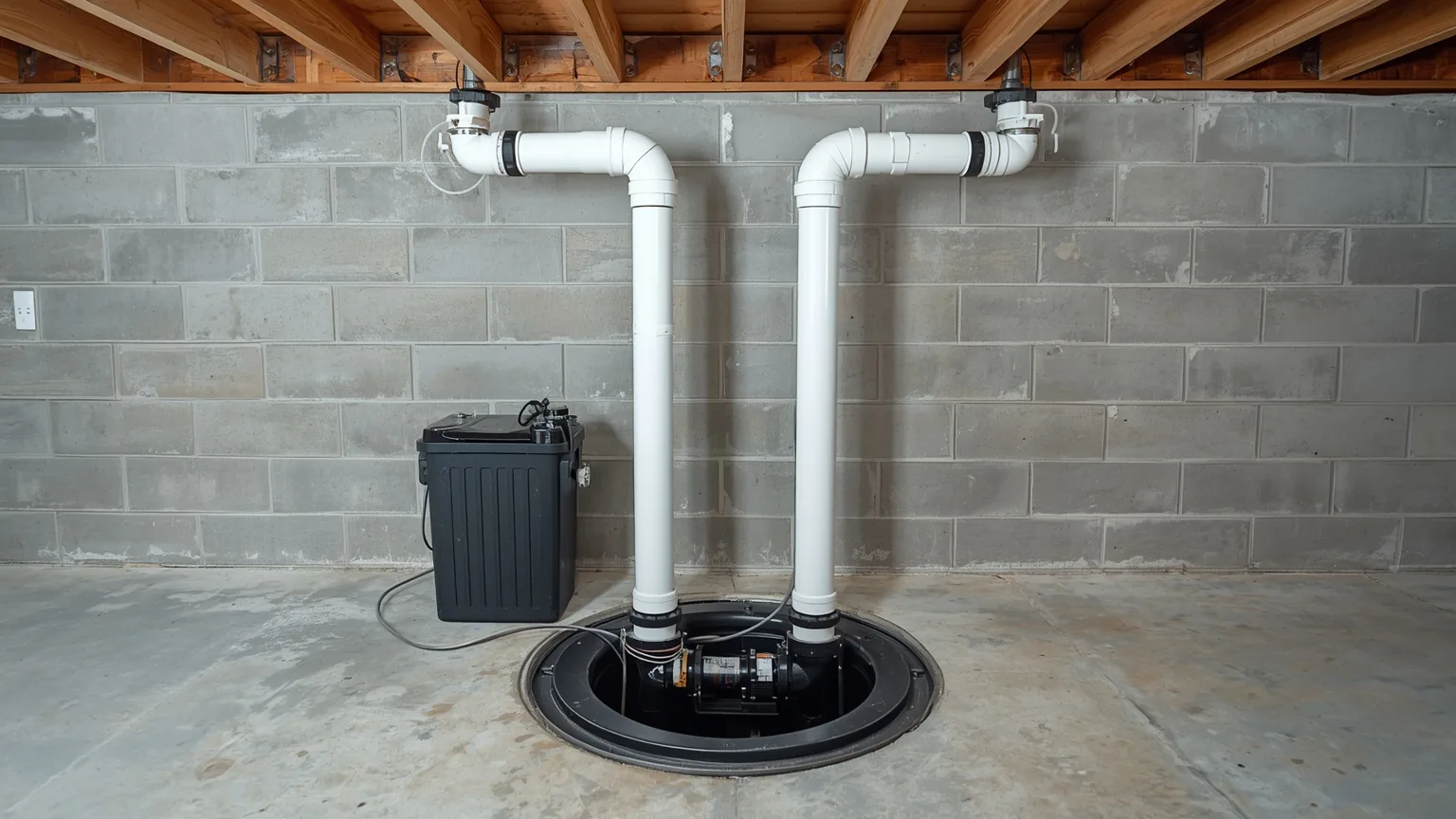
A sump pump is the discharge end of a drainage system. Sizing it for a Green Bay thaw rather than a summer storm, and running the discharge somewhere legal and unfreezable, is what keeps a basement dry through April.
Sump Pump Replacement
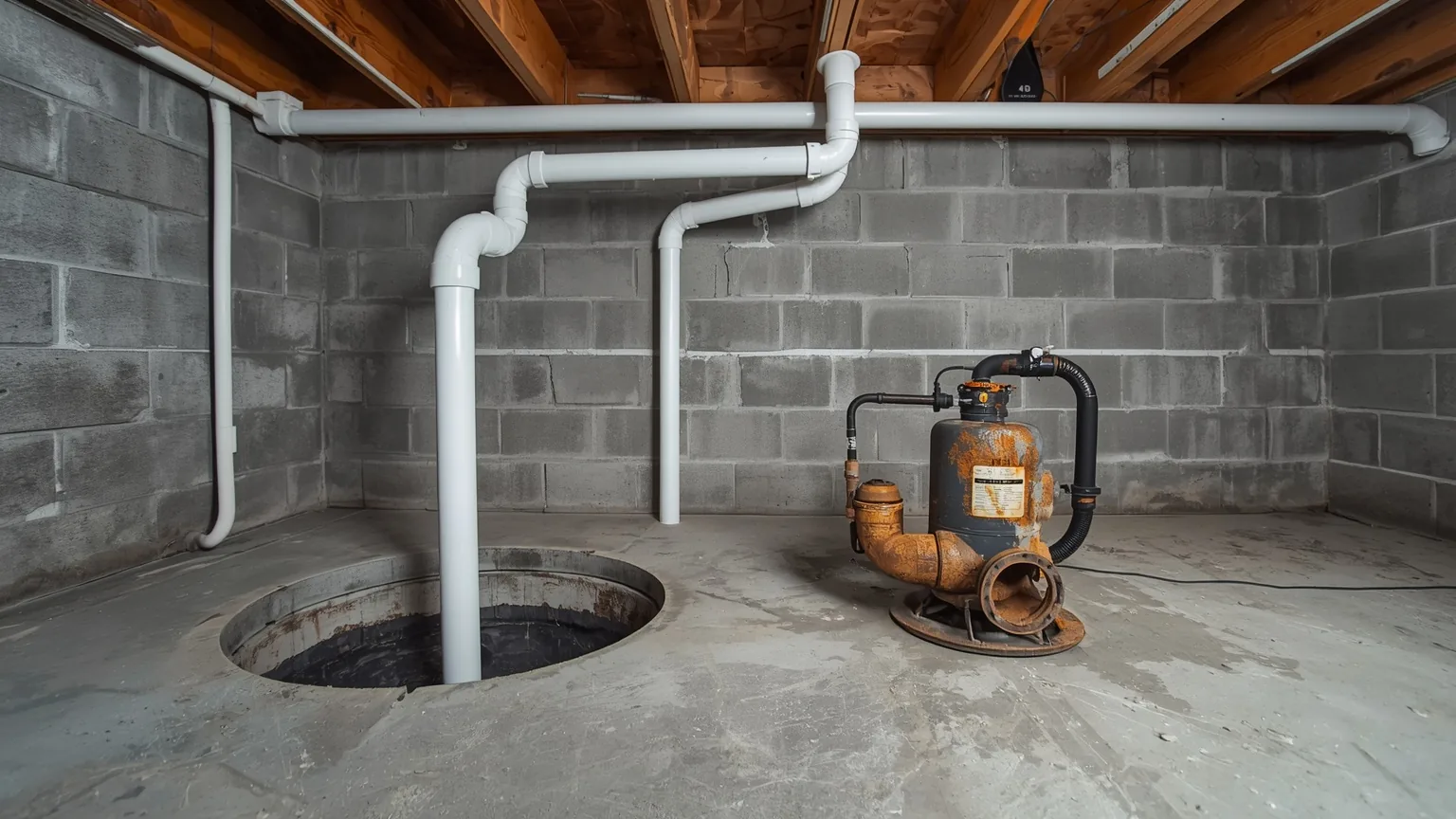
Sump pumps fail on the day they matter. In Northeast Wisconsin that day is in March, and replacing on age rather than on failure is the cheapest insurance a basement has.
French Drain Installation
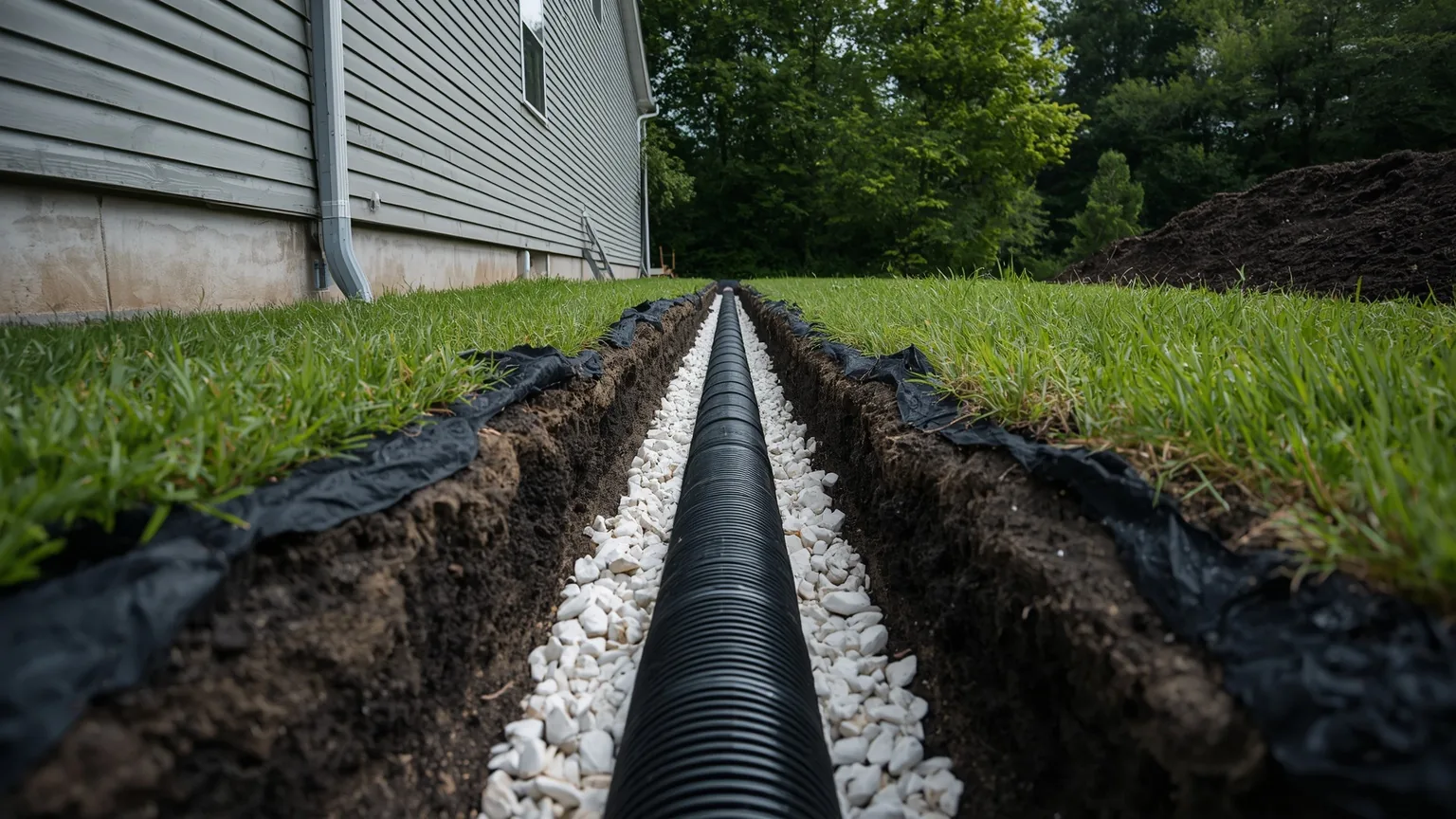
Brown County clay does not absorb water, it sheets it. A French drain intercepts that flow and sends it somewhere other than your foundation.
Find out what's actually causing it.
A free on-site inspection and a written scope — before any work is quoted.