
Wet basement repair in Green Bay
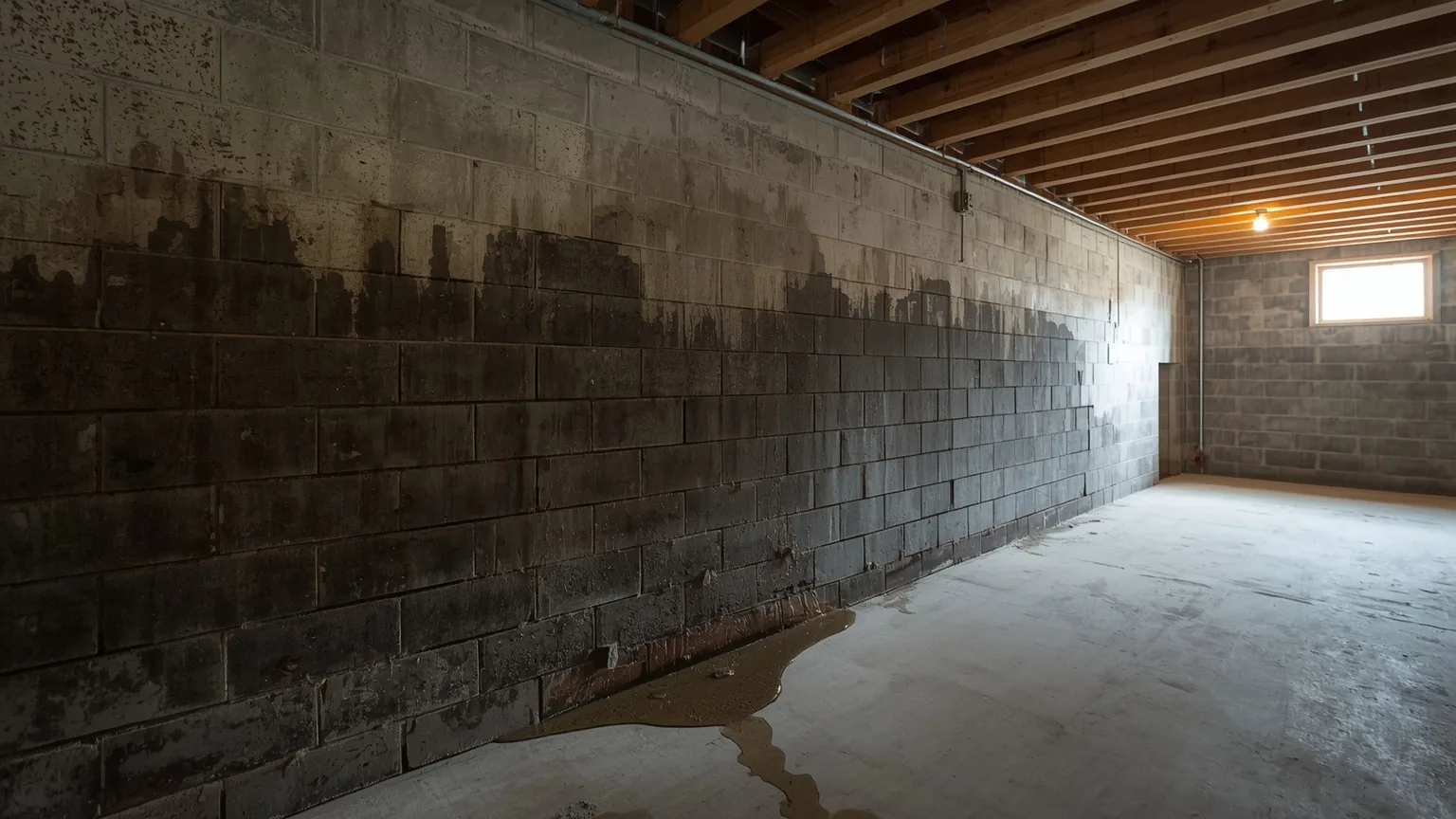
Green Bay basements leak on a trigger — a heavy rain, a saturated spring, or the thaw week when meltwater runs across frozen ground. Which trigger yours has tells you what the repair costs.
Who handles wet basement repair in Green Bay, WI?
Green Bay Basements diagnoses and repairs wet basements across Green Bay — identifying whether water is entering at the cove joint, through wall cracks, from window wells, or over the top of the foundation, then fixing that specific path. Call (920) 545-4548.
- Typical cost: $3,000–$12,000 in Brown County
- Soil: Kewaunee-Manawa-Poygan — silt over 5–20 ft of red lake clay, poor drainage
- Frost depth: 48" — footings and discharge lines must sit below it
- Code: Wisconsin Uniform Dwelling Code (SPS 320-325), administered by the Department of Safety and Professional Services
- Service area: Green Bay and 9 surrounding counties, 45-mile radius
The five ways water gets in
Over the top of the foundation, when grade slopes toward the house or a downspout discharges at the wall. Through a wall crack, under pressure from saturated backfill. Through the cove joint where wall meets floor, which is where water goes when the pressure is beneath the slab. Up through the floor itself, when the water table rises above the slab. And through a window well with a failed or absent drain.
Timing separates them and it costs nothing to observe. Water within an hour of rain has not travelled through soil — it is surface water arriving over the top or through a well. Water a day or two later, or during a wet spring with no immediate storm, means the ground has saturated and the pressure has come up. In Green Bay there is a third pattern worth knowing: water that appears during the March thaw with no rain at all, which is meltwater running across still-frozen ground and finding the lowest opening it can.
Diagnosis before quote
A proper inspection walks the full perimeter inside and out, checks grade and downspout discharge, looks at window wells, examines the cove joint along its length, and asks when the water appears relative to weather. That last question resolves more cases than any instrument.
The reason this matters is money. Regrading and extending downspouts can resolve a surface-water problem for a few hundred dollars. A full interior perimeter system is a five-figure job. Quoting the second without ruling out the first is how homeowners end up paying ten times what the problem required — and a contractor who proposes a perimeter system without inspecting the perimeter has not diagnosed anything.
Why Brown County soil drives this
Brown County sits on the Kewaunee-Manawa-Poygan soil association — a thin silty cap over calcareous red clay laid down as lake sediment by Glacial Lake Oshkosh and the Green Bay Lobe. That red clay runs roughly 5 to 20 feet thick across most of the county and is among the least permeable material a foundation can be built into.
The Manawa and Poygan members of that association are rated somewhat poorly and poorly drained — they hold water near the surface instead of passing it down, so a wet spring loads the outside of a foundation wall for weeks at a time rather than days. A saturated clay backfill can exert well over 1,000 lb of lateral force per linear foot against a block wall — enough to bow an 8-inch wall inward with no visible cause outside.
The Fox River mouth and the bay shore keep the water table shallow across the lower East and West sides, and the flat lake plain gives water nowhere to run once the clay above it has taken all it can hold. In the older core neighborhoods the problem compounds — green bay's older neighborhoods — astor, whitney park, navarino, olde north — are dominated by pre-1940 housing on block or rubble foundations built before drain tile was ever required.
Wet Basement Repair questions
Why does my basement only leak sometimes?
Because the conditions that let it in are intermittent. Most Green Bay basements leak on a specific trigger — a rain heavy enough to overwhelm surface drainage, a spring where the clay finally saturates through, or the thaw week when meltwater runs across frozen ground. Track the date and the weather each time it happens; the pattern names the cause.
Water is coming up where the wall meets the floor. What is that?
That is the cove joint, and it is the most common entry point in Brown County. Wall and floor are poured separately and never bond, leaving a seam. When water pressure builds under the slab it takes that seam because it is the path of least resistance. It means the pressure is beneath the floor, which is an interior drainage and sump problem — sealing the joint just moves the water along it.
Could it be a plumbing leak instead of groundwater?
It can be, and it is worth ruling out before spending on drainage. Plumbing leaks are steady and weather-independent; groundwater tracks rain and thaw. Check the water meter with everything off, look for a wet patch that never dries even in a dry spell, and check the water heater and any condensate line. A leak that appears on a schedule tied to weather is groundwater.
How much does it cost to fix a wet basement?
It depends entirely on the entry point. Regrading and downspout extensions can be a few hundred dollars. Crack injection is $400–$1,200. A full interior perimeter system with a sump is $5,000–$15,000. That spread is exactly why the diagnosis has to come before the quote.
Will a dehumidifier solve it?
No. A dehumidifier manages humidity in the air; it does nothing about liquid water arriving through a wall or floor under pressure. It is a useful finishing step after the water is controlled, and a poor substitute for controlling it — running one against an active leak simply raises your power bill while the wall keeps getting wet.
Related waterproofing services
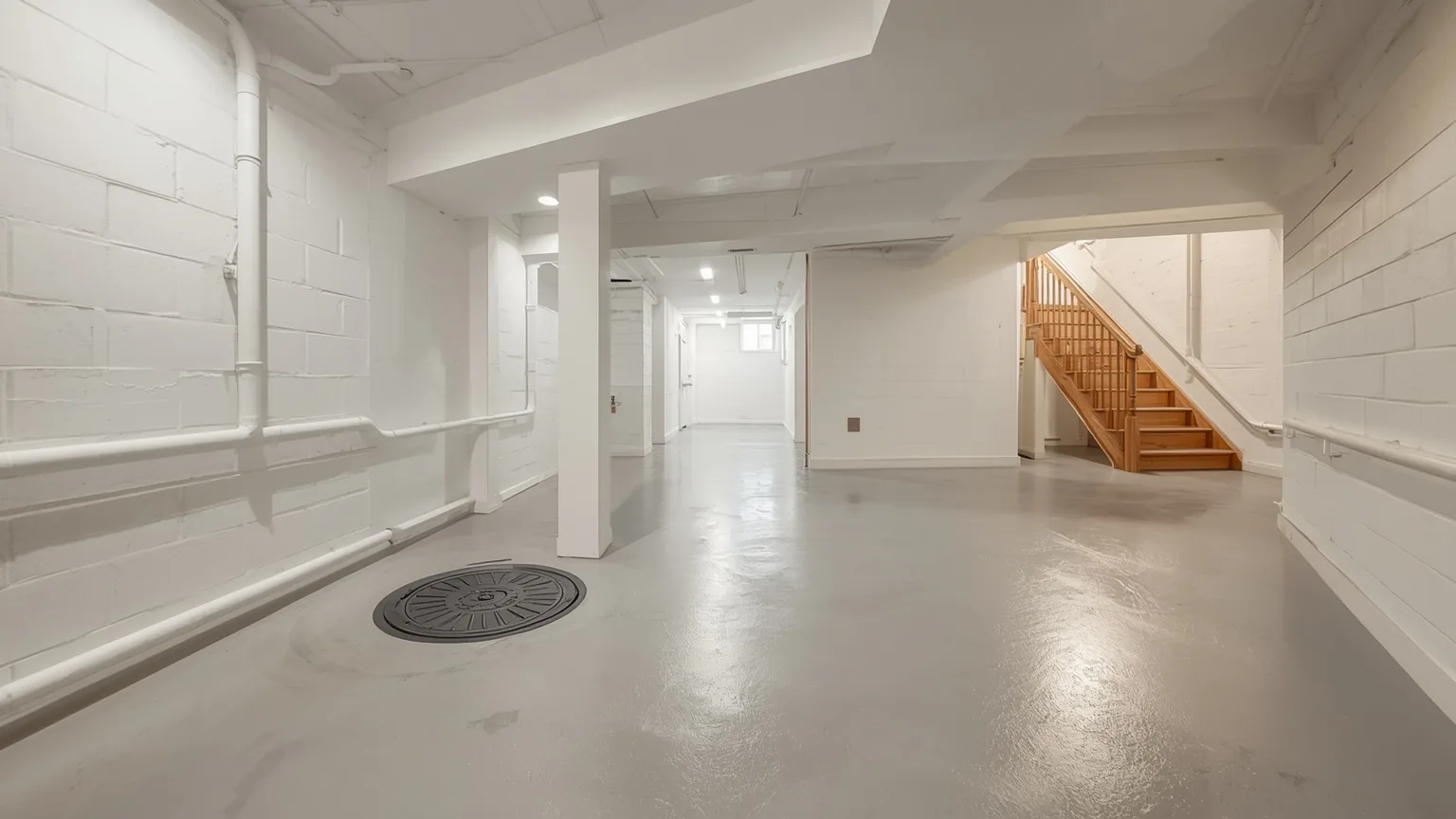
Basement Waterproofing
A wet Green Bay basement is a thaw problem before it is a rain problem. Fifty-five inches of snow melts into ground that has been frozen since December, and the red lake clay underneath cannot take it.
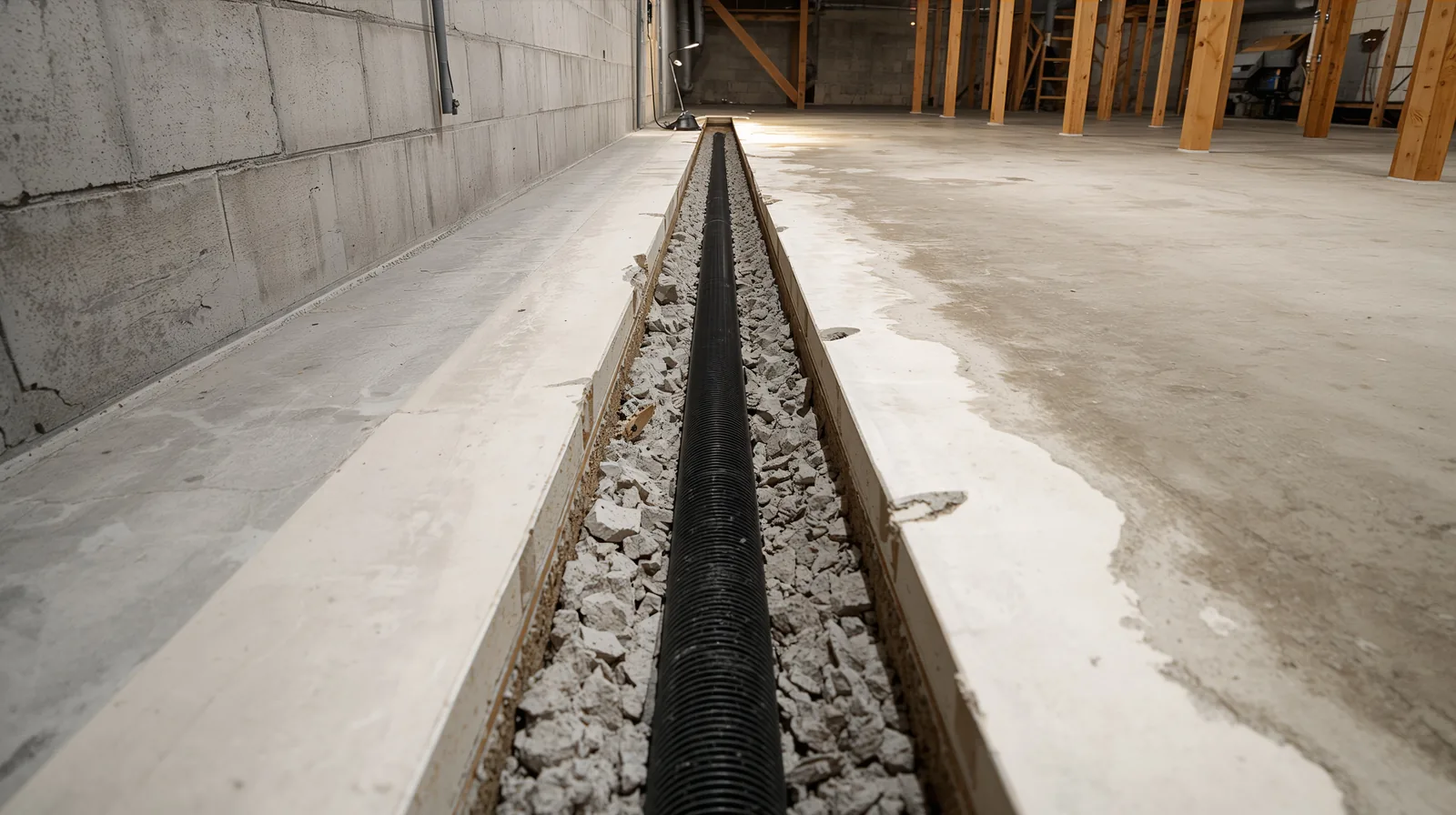
Interior Drain Tile
Interior drain tile is the workhorse repair for Green Bay basements. It relieves the pressure red lake clay creates without excavating the yard — and it can be installed in February.
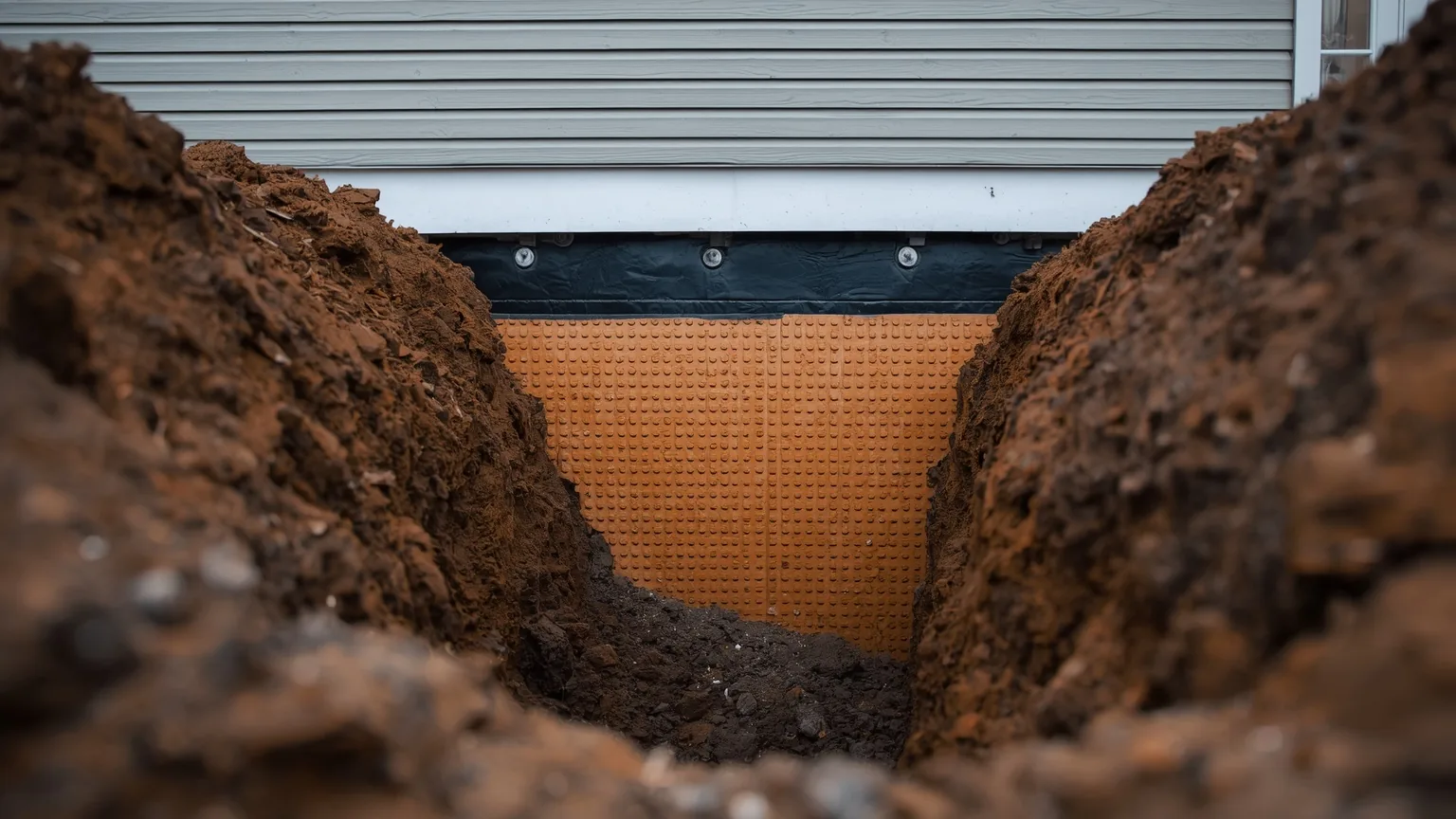
Exterior Basement Waterproofing
Digging to the outside of the wall is the most thorough repair there is. Wisconsin's 48-inch frost rule makes it deeper, costlier and strictly a warm-season job.
Find out what's actually causing it.
A free on-site inspection and a written scope — before any work is quoted.