
Foundation crack repair in Green Bay
Not every crack is structural, and not every crack is only a leak. Direction, width and whether it is moving tell you which one you have.
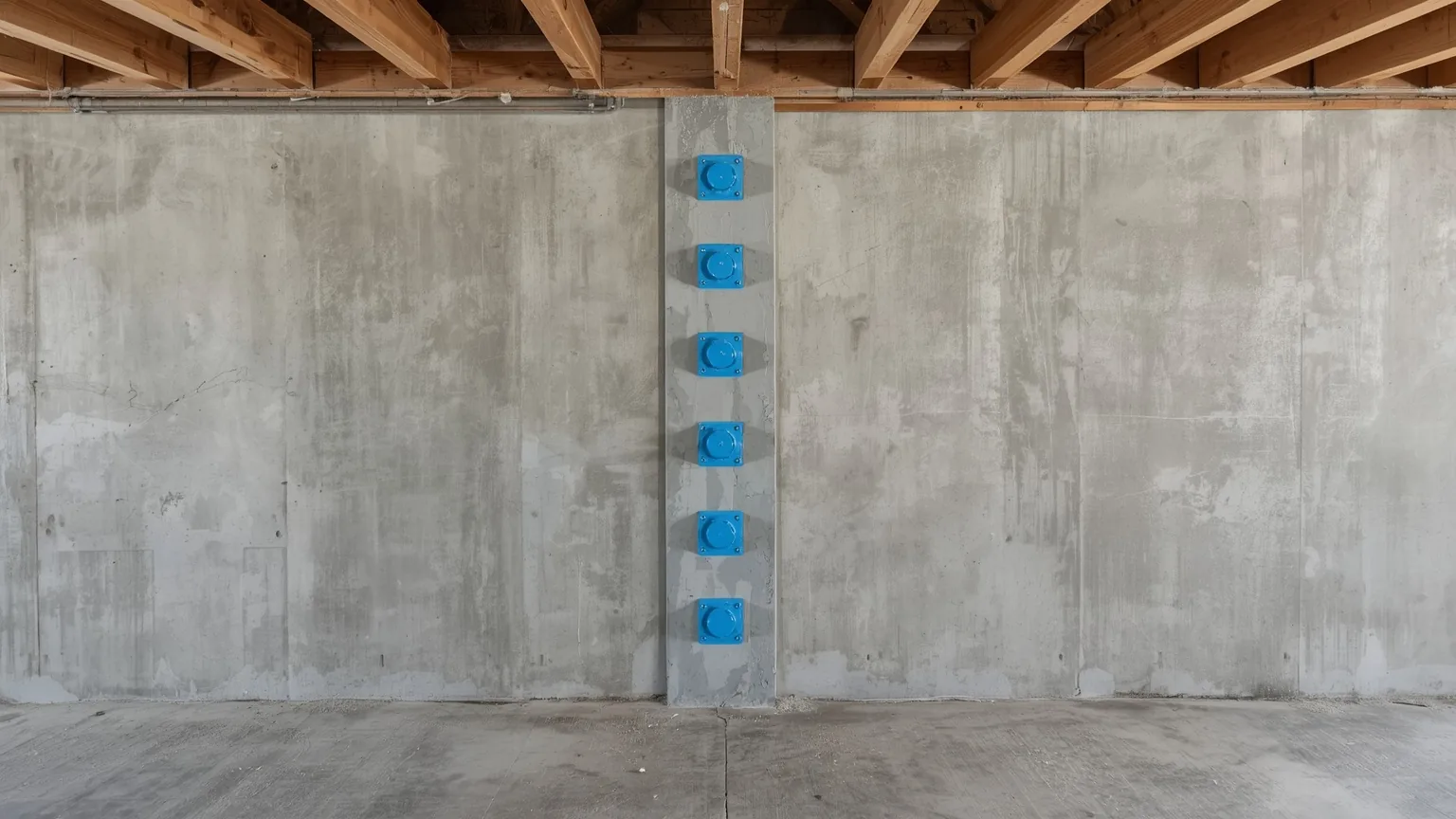
Who handles foundation crack repair in Green Bay, WI?
Green Bay Basements repairs foundation and basement wall cracks in Green Bay using polyurethane and epoxy injection that fills the full wall thickness, after assessing whether the crack is structural or shrinkage. Call (920) 545-4548.
- Typical cost: $400–$1,200 in Brown County
- Soil: Kewaunee-Manawa-Poygan — silt over 5–20 ft of red lake clay, poor drainage
- Frost depth: 48" — footings and discharge lines must sit below it
- Code: Wisconsin Uniform Dwelling Code (SPS 320-325), administered by the Department of Safety and Professional Services
- Service area: Green Bay and 9 surrounding counties, 45-mile radius
Reading the crack
Vertical and near-vertical hairline cracks in poured walls are usually curing shrinkage. Concrete gives up water as it cures and shrinks slightly; the wall relieves that somewhere. They are water paths, not strength problems, and they are extremely common in Brown County homes built after the 1970s.
Horizontal cracks are different in kind. A crack running along a mortar course near mid-height means the wall is bending under lateral load from saturated clay, and that is structural. Stair-step cracking in block usually points at footing movement. Northeast Wisconsin adds a mechanism most markets do not have to worry about as much: with frost driven to 48 inches, water sitting in an unsealed crack freezes and expands inside the wall, and each winter widens what the previous winter opened.
Injection done properly
A proper repair fills the crack through the full thickness of the wall, not just at the face. Ports are set along the crack, the surface is sealed between them, and resin is injected under low pressure from the bottom up until it appears at the next port — that is how you know the void behind is full.
Polyurethane is the right choice against active water; it foams on contact with moisture and stays flexible enough to tolerate seasonal movement, which matters where clay swells and shrinks annually. Epoxy is rigid and stronger, and belongs on a dry structural crack that is not moving. Choosing epoxy on a wall that is still cycling puts the next crack right beside the repair.
Why Brown County soil drives this
Brown County sits on the Kewaunee-Manawa-Poygan soil association — a thin silty cap over calcareous red clay laid down as lake sediment by Glacial Lake Oshkosh and the Green Bay Lobe. That red clay runs roughly 5 to 20 feet thick across most of the county and is among the least permeable material a foundation can be built into.
The Manawa and Poygan members of that association are rated somewhat poorly and poorly drained — they hold water near the surface instead of passing it down, so a wet spring loads the outside of a foundation wall for weeks at a time rather than days. A saturated clay backfill can exert well over 1,000 lb of lateral force per linear foot against a block wall — enough to bow an 8-inch wall inward with no visible cause outside.
The Fox River mouth and the bay shore keep the water table shallow across the lower East and West sides, and the flat lake plain gives water nowhere to run once the clay above it has taken all it can hold. In the older core neighborhoods the problem compounds — green bay's older neighborhoods — astor, whitney park, navarino, olde north — are dominated by pre-1940 housing on block or rubble foundations built before drain tile was ever required.
Foundation Crack Repair questions
How much does crack repair cost in Green Bay?
Crack injection in Brown County runs $400 to $1,200 per crack, depending on length, wall thickness and whether water is running while the work is done. A wall with several cracks is usually quoted as one job rather than per crack.
Is a vertical crack in my foundation serious?
Usually not structurally. A vertical hairline in a poured wall is typically shrinkage from curing — a water path rather than a strength problem. It still deserves sealing, because in this climate an open crack collects water that freezes at depth and widens the crack a little more each winter. Watch width and movement, not the existence of the crack.
Can I use hydraulic cement from the hardware store?
It will stop the drip for a while and it will not fix the crack. Hydraulic cement works at the surface, so it holds back water arriving at low pressure and fails when the clay outside is fully loaded in spring. It also bonds rigidly across a crack that is still moving seasonally, so it cracks again — usually just beside the patch. It is a reasonable emergency measure and a poor repair.
Related foundation services
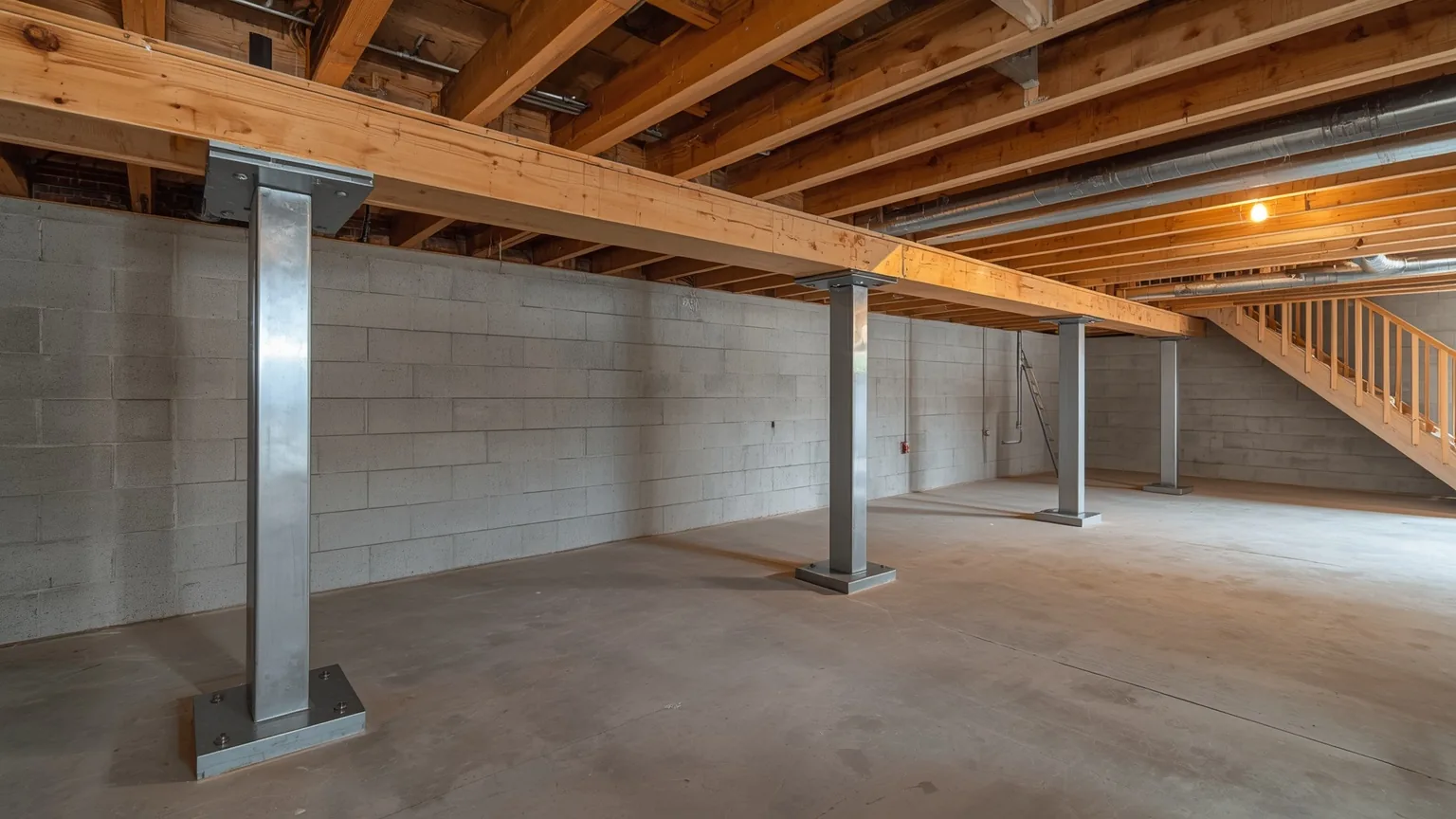
Foundation Repair
Foundation problems in Brown County come from two directions: red lake clay pushing walls inward, and soil consolidating under footings. They look different, they fail differently, and they need different repairs.
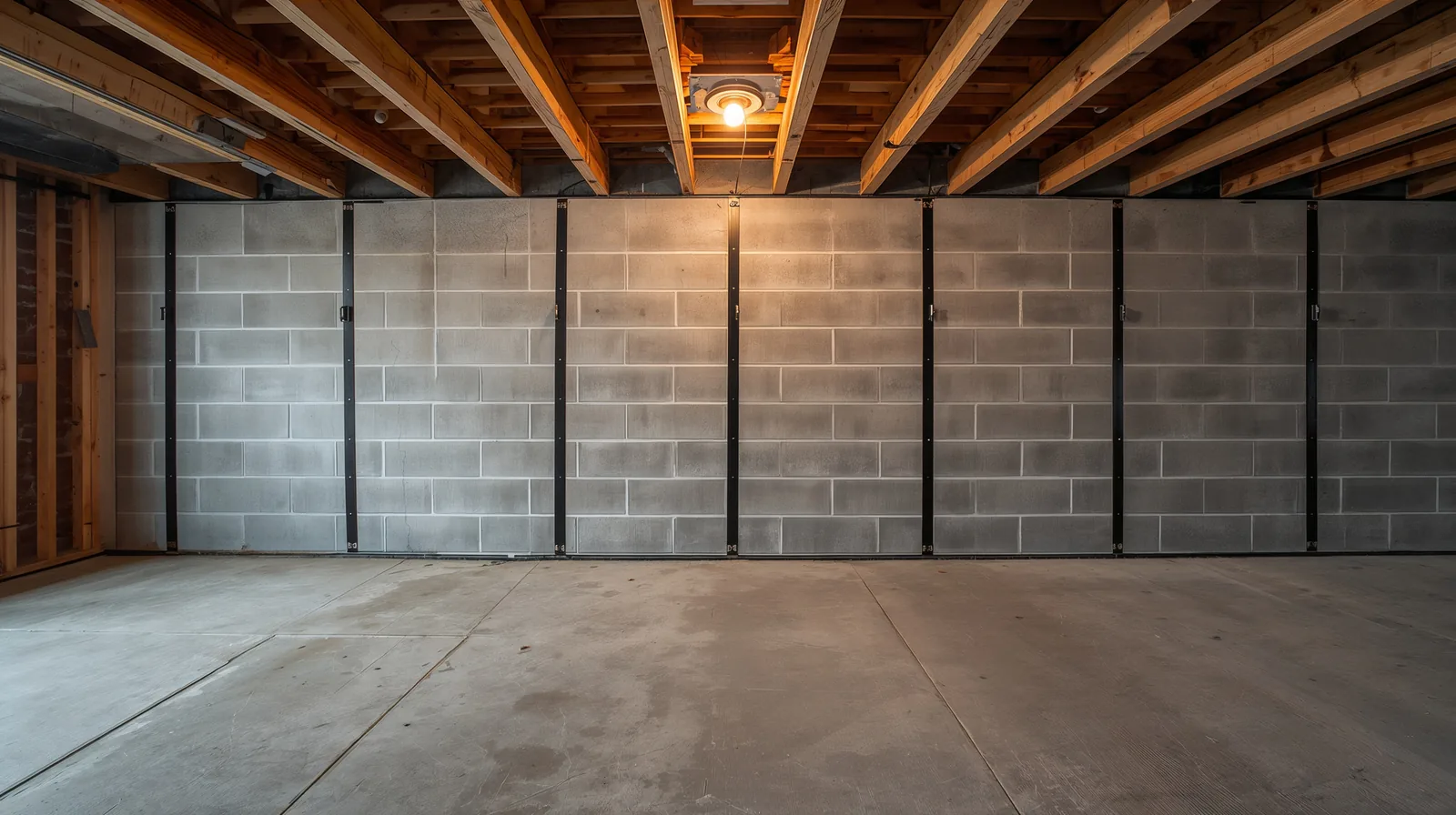
Bowing & Basement Wall Repair
Red lake clay leans on a wall for the length of a Green Bay spring, then frost locks in whatever ground it gained. Bowing walls move in a ratchet — a little more every year.
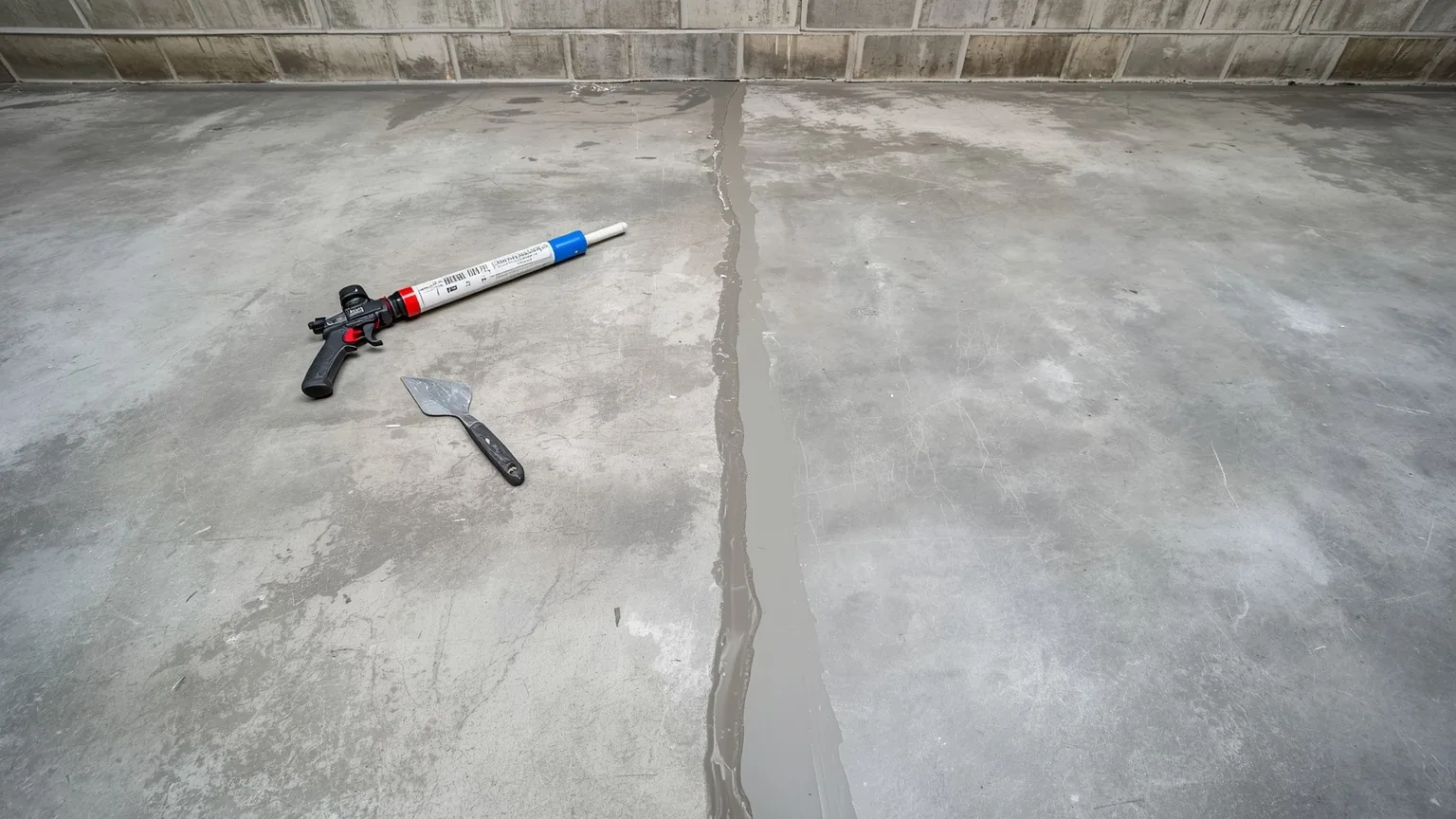
Basement Floor Crack Repair
A hairline in the slab with both sides level is curing shrinkage. A crack with a lip means the ground underneath moved, and on the escarpment side of the county that happens where a slab bears half on rock and half on clay.
Find out what's actually causing it.
A free on-site inspection and a written scope — before any work is quoted.