
Bowing basement wall repair in Green Bay
Red lake clay leans on a wall for the length of a Green Bay spring, then frost locks in whatever ground it gained. Bowing walls move in a ratchet — a little more every year.
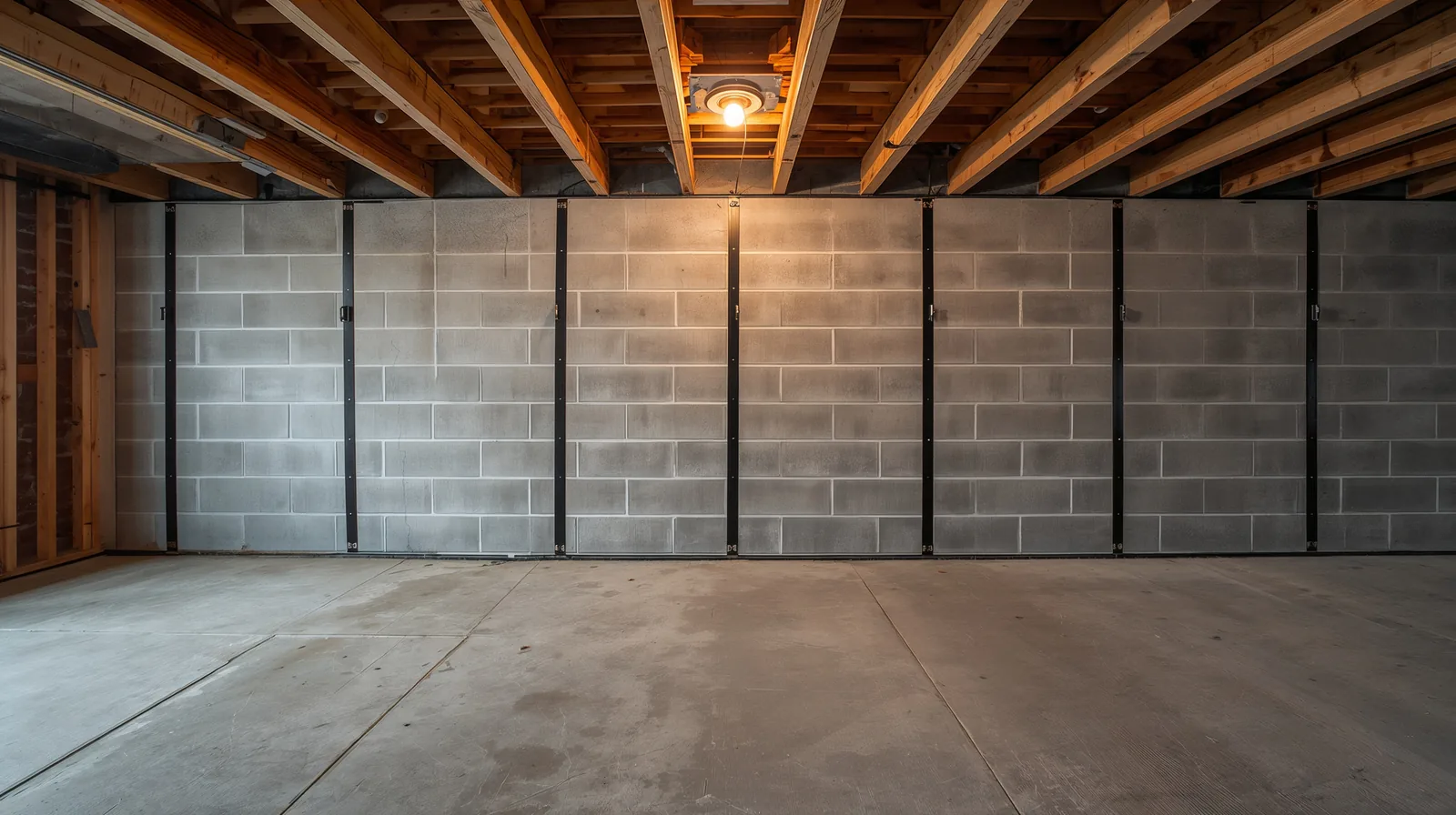
Who handles bowing & basement wall repair in Green Bay, WI?
Green Bay Basements stabilizes bowing and cracked basement walls in Green Bay with carbon fiber straps, wall anchors, or steel I-beam bracing, selected by how far the wall has deflected and what yard access exists. Call (920) 545-4548.
- Typical cost: $4,000–$15,000 in Brown County
- Soil: Kewaunee-Manawa-Poygan — silt over 5–20 ft of red lake clay, poor drainage
- Frost depth: 48" — footings and discharge lines must sit below it
- Code: Wisconsin Uniform Dwelling Code (SPS 320-325), administered by the Department of Safety and Professional Services
- Service area: Green Bay and 9 surrounding counties, 45-mile radius
Why Green Bay block walls bow
Red lake clay swells when it takes water and holds that volume for as long as it holds the water. Through a Northeast Wisconsin spring that is weeks, not days. The wall is not hit by a storm; it is leaned on for a season, and an 8-inch block wall built in 1955 was never designed for a sustained 1,000-plus pounds per linear foot.
Winter then locks in the damage. With frost driven to 48 inches, water in the backfill and in the wall's own cracks freezes well down the wall rather than just near the surface, expands, and gives back a little less each spring. The result is a wall that moves in a ratchet — a bit more every year, never returning. Horizontal cracking along a mortar course near mid-height is the classic evidence, often with the wall's own weight holding the crack closed enough that it goes unnoticed for years.
Choosing the repair
Deflection decides the method. Under roughly two inches, carbon fiber straps bonded to the block face are usually sufficient — they are flat, do not intrude into the room, and can be finished over. Past that, steel I-beam bracing anchored to the slab and joist system carries more load and takes up floor space.
Wall anchors tie the wall back to a steel plate buried in undisturbed soil out in the yard, and they are the only method that can actually pull a wall back toward plumb over time. They also need yard access and stable bearing soil, which excludes tight urban lots in Astor, Whitney Park and much of Allouez, and they need excavation — so in practice they are an April-to-November option here.
None of these address the water. Stabilization stops the movement; drainage removes the load that caused it. Doing the first without the second means the same pressure returns with the next thaw against a now-braced wall.
Why Brown County soil drives this
Brown County sits on the Kewaunee-Manawa-Poygan soil association — a thin silty cap over calcareous red clay laid down as lake sediment by Glacial Lake Oshkosh and the Green Bay Lobe. That red clay runs roughly 5 to 20 feet thick across most of the county and is among the least permeable material a foundation can be built into.
The Manawa and Poygan members of that association are rated somewhat poorly and poorly drained — they hold water near the surface instead of passing it down, so a wet spring loads the outside of a foundation wall for weeks at a time rather than days. A saturated clay backfill can exert well over 1,000 lb of lateral force per linear foot against a block wall — enough to bow an 8-inch wall inward with no visible cause outside.
The Fox River mouth and the bay shore keep the water table shallow across the lower East and West sides, and the flat lake plain gives water nowhere to run once the clay above it has taken all it can hold. In the older core neighborhoods the problem compounds — green bay's older neighborhoods — astor, whitney park, navarino, olde north — are dominated by pre-1940 housing on block or rubble foundations built before drain tile was ever required.
Bowing & Basement Wall Repair questions
How much does bowing wall repair cost in Green Bay?
Bowing wall repair in Brown County runs $4,000 to $15,000, depending on wall length, how far it has moved and which method the deflection calls for. Carbon fiber on a modestly bowed wall sits at the low end; anchors or full bracing on a badly deflected wall sit at the top.
How much bowing is too much?
Two inches of deflection is the rough line where carbon fiber stops being appropriate and bracing or anchors become the answer. But the rate matters as much as the number — a wall that has moved half an inch in the last year is more urgent than one that moved two inches over three decades and stopped. Measure with a string line and a date, and measure again in six months.
Can a bowed wall be pushed back straight?
Sometimes, partially, with wall anchors — tightened gradually over months, often with the exterior soil excavated to relieve pressure. Carbon fiber and steel bracing stabilize where the wall currently is; they do not straighten it. Any contractor promising to return a badly bowed wall to plumb in a single visit is overselling.
Is a bowing wall an emergency?
It depends on rate and degree. A hairline horizontal crack with no measurable bow needs monitoring and a plan. A wall with two or more inches of deflection, cracking that is visibly widening, or block that has begun to shear at the joints needs assessment now — and if it has moved noticeably in a single season, before the next thaw rather than after it.
Related foundation services
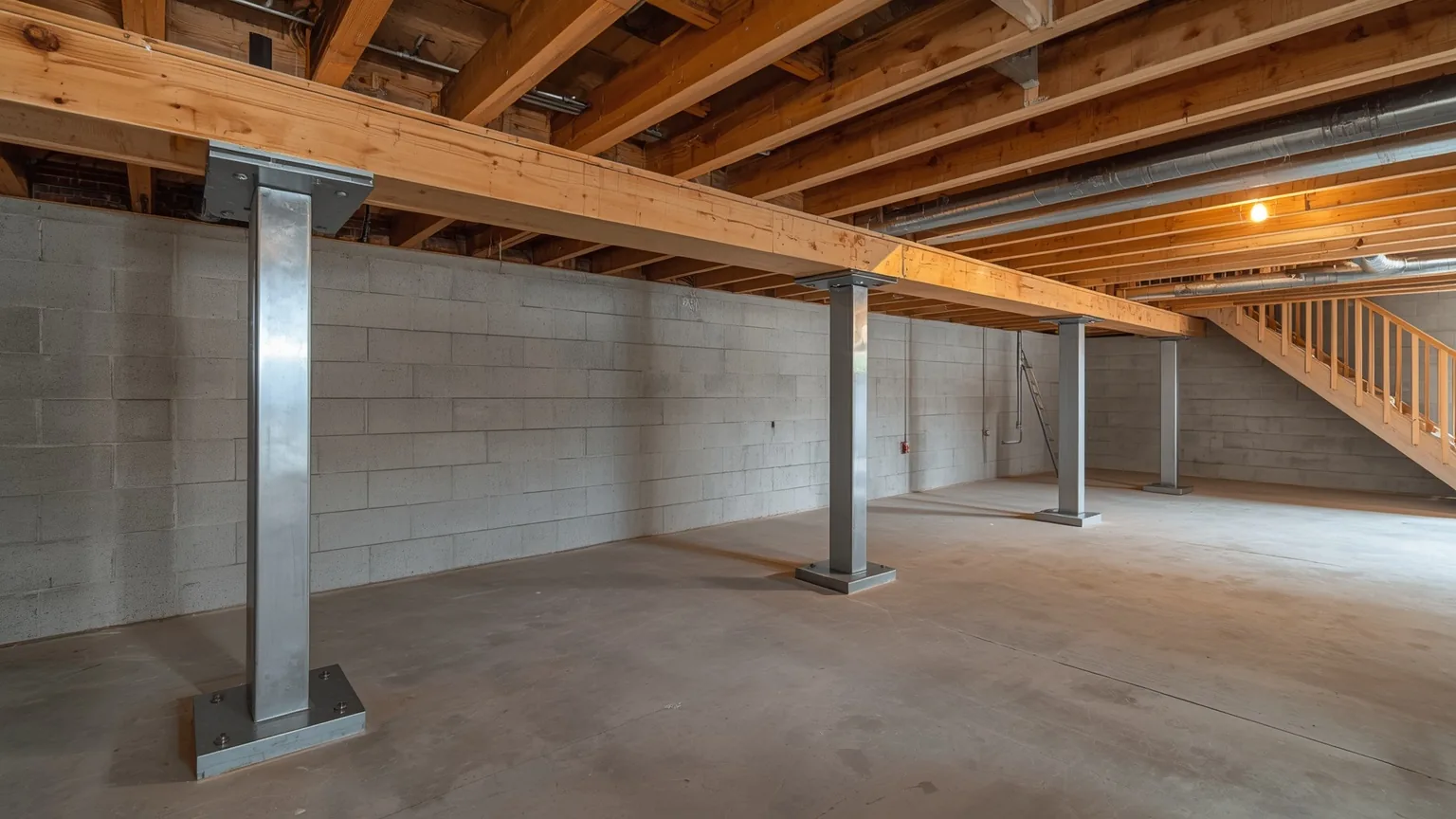
Foundation Repair
Foundation problems in Brown County come from two directions: red lake clay pushing walls inward, and soil consolidating under footings. They look different, they fail differently, and they need different repairs.
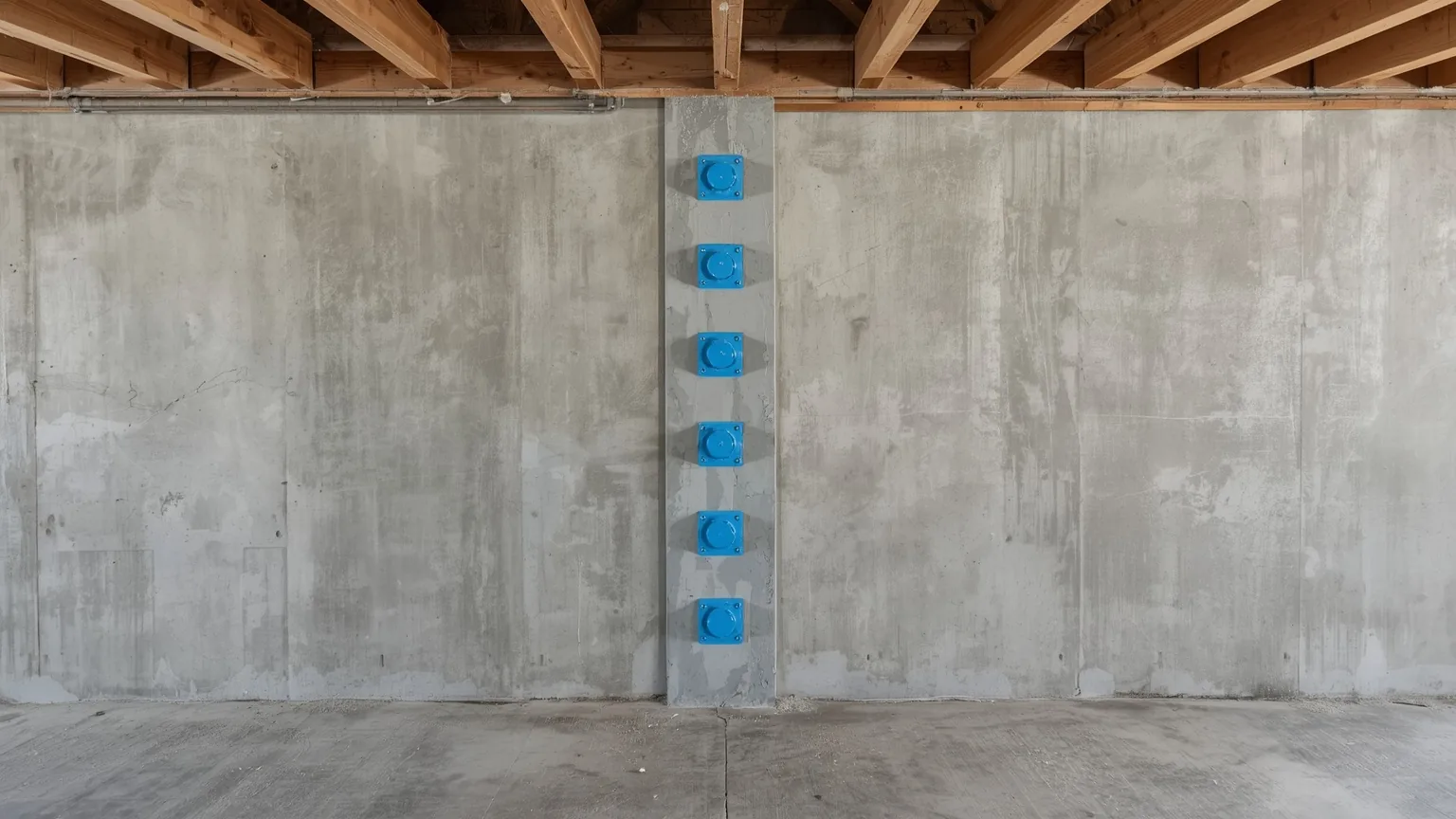
Foundation Crack Repair
Not every crack is structural, and not every crack is only a leak. Direction, width and whether it is moving tell you which one you have.
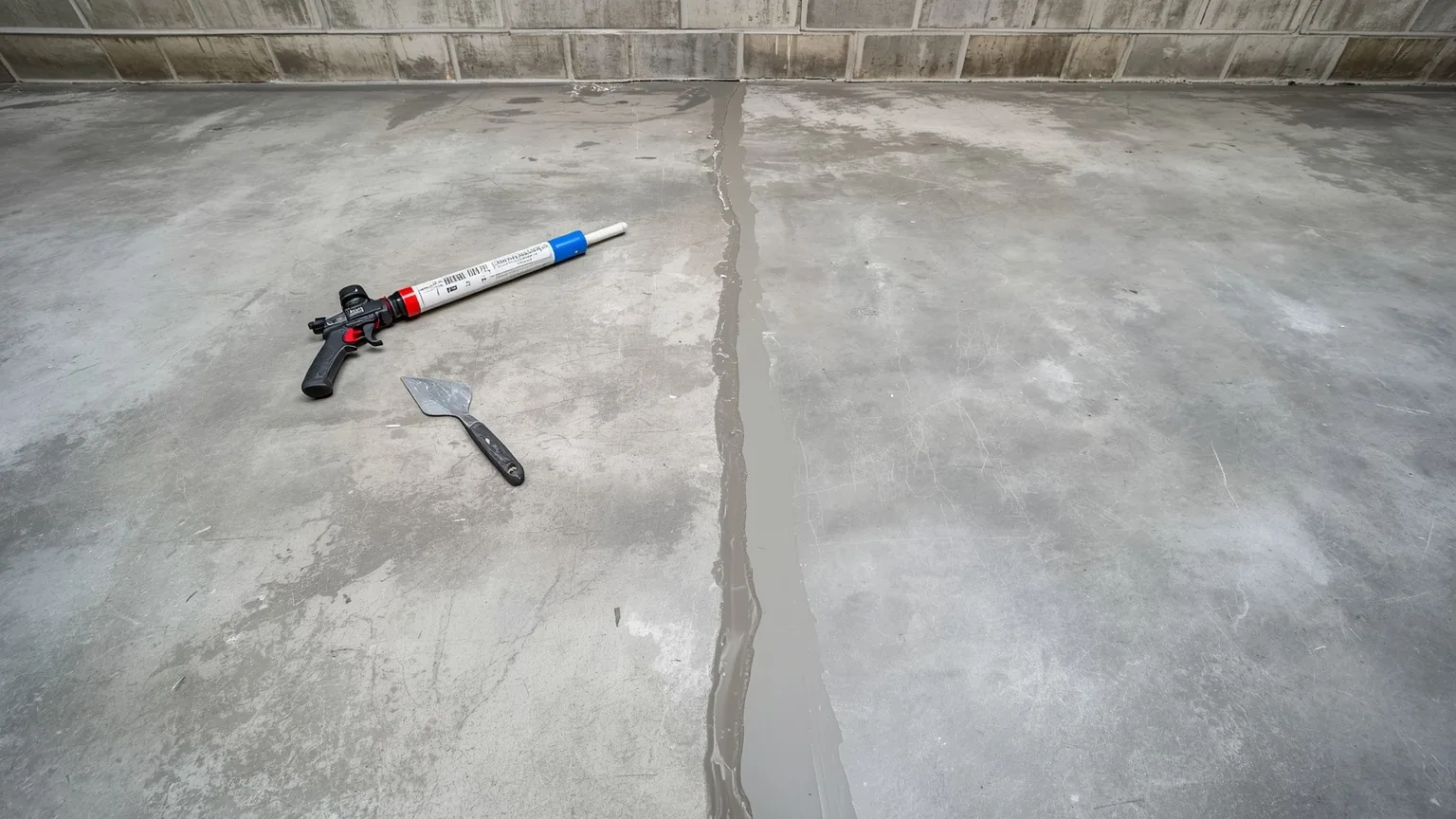
Basement Floor Crack Repair
A hairline in the slab with both sides level is curing shrinkage. A crack with a lip means the ground underneath moved, and on the escarpment side of the county that happens where a slab bears half on rock and half on clay.
Find out what's actually causing it.
A free on-site inspection and a written scope — before any work is quoted.