
Basement waterproofing in Green Bay
A wet Green Bay basement is a thaw problem before it is a rain problem. Fifty-five inches of snow melts into ground that has been frozen since December, and the red lake clay underneath cannot take it.
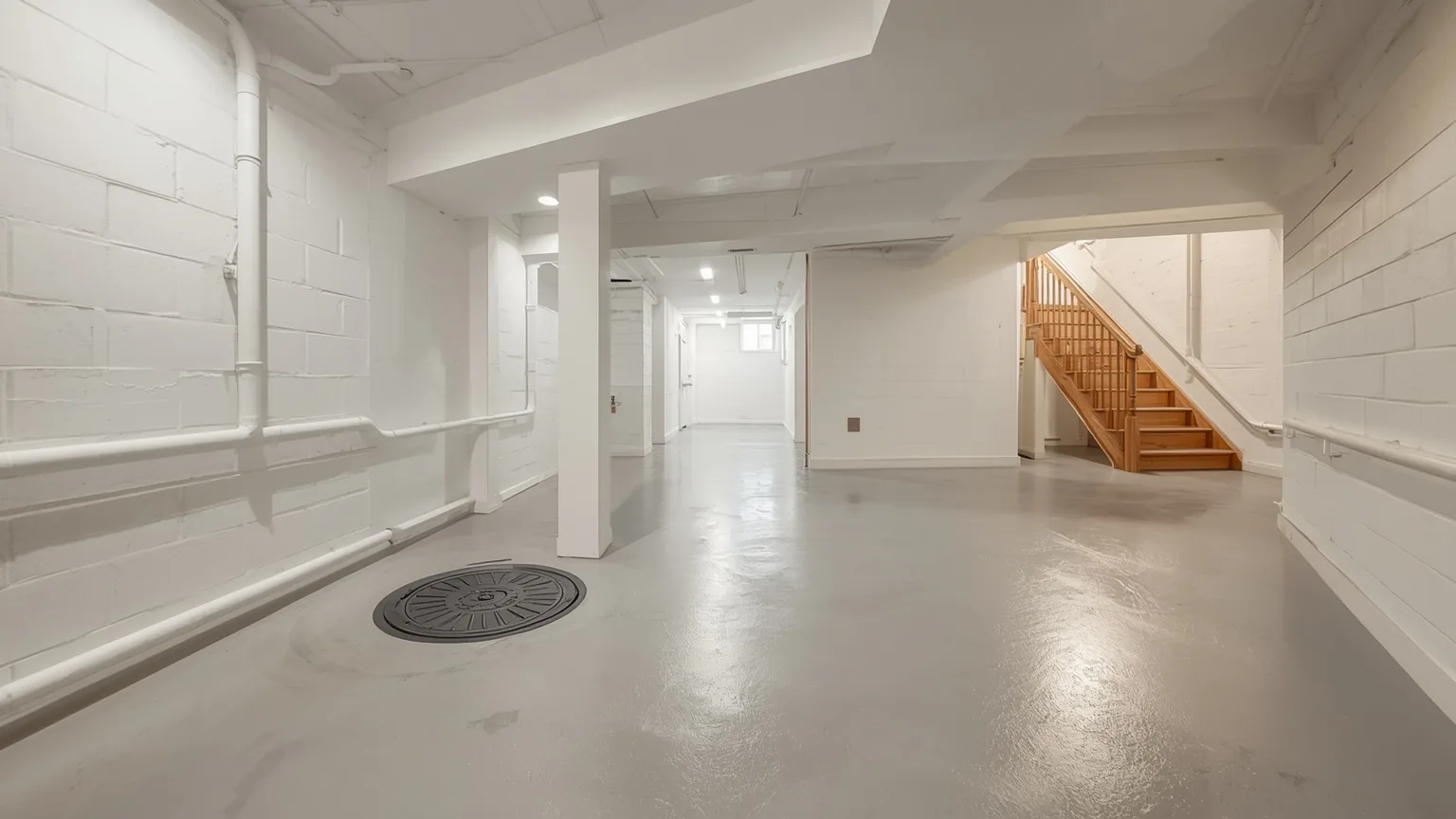
Who handles basement waterproofing in Green Bay, WI?
Green Bay Basements handles basement waterproofing across Green Bay and Brown County — interior drain tile, sump systems, exterior membrane, and wall stabilization sized for Northeast Wisconsin's dense glacial clay. Free on-site inspection and a written scope before any work begins. Call (920) 545-4548.
- Typical cost: $3,000–$12,000 in Brown County
- Soil: Kewaunee-Manawa-Poygan — silt over 5–20 ft of red lake clay, poor drainage
- Frost depth: 48" — footings and discharge lines must sit below it
- Code: Wisconsin Uniform Dwelling Code (SPS 320-325), administered by the Department of Safety and Professional Services
- Service area: Green Bay and 9 surrounding counties, 45-mile radius
Why Green Bay basements leak
Brown County sits on five to twenty feet of red lake clay — sediment that settled out of Glacial Lake Oshkosh as the Green Bay Lobe retreated. It was deposited in still water, so it is layered, fine, and close to impermeable. Water does not pass through it. Water sits on it.
That matters most in March. The ground here freezes to depth from December, and Green Bay averages 55.6 inches of snow against only 31.6 inches of rain. When the thaw comes, a winter's accumulation arrives over a few weeks onto clay that is still frozen below and cannot absorb any of it. The water perches, finds the backfill trench beside your foundation — the loosest ground on the lot — and stands there against the wall.
A saturated clay backfill can exert well over 1,000 pounds of lateral force per linear foot. That is the load a mid-century block wall was never designed to hold, and it is why the leak appears at a joint rather than through the block face.
What a permanent system looks like
Wisconsin does not merely require drain tile — it specifies it. SPS 321.17 calls for tile of at least 3 inches inside diameter, bedded on at least 2 inches of coarse aggregate, covered on top and on the outward face with at least 12 inches more, and connected to a sump pit. A system that meets that specification relieves the pressure instead of resisting it.
For most Green Bay homes the practical answer is an interior perimeter drain: the slab edge is cut, tile is set in washed stone at the footing, and everything discharges to a sealed basin with a pump sized for meltwater volume rather than average rainfall. The distinction matters here — a pump adequate for a summer storm can be undersized for a week of April thaw.
Coatings do not work on this ground. Paint and hydraulic cement resist water at the wall face while the clay outside stays saturated for weeks. They fail in a season or two, and usually just relocate the leak to the cove joint where the wall meets the floor.
Why Brown County soil drives this
Brown County sits on the Kewaunee-Manawa-Poygan soil association — a thin silty cap over calcareous red clay laid down as lake sediment by Glacial Lake Oshkosh and the Green Bay Lobe. That red clay runs roughly 5 to 20 feet thick across most of the county and is among the least permeable material a foundation can be built into.
The Manawa and Poygan members of that association are rated somewhat poorly and poorly drained — they hold water near the surface instead of passing it down, so a wet spring loads the outside of a foundation wall for weeks at a time rather than days. A saturated clay backfill can exert well over 1,000 lb of lateral force per linear foot against a block wall — enough to bow an 8-inch wall inward with no visible cause outside.
The Fox River mouth and the bay shore keep the water table shallow across the lower East and West sides, and the flat lake plain gives water nowhere to run once the clay above it has taken all it can hold. In the older core neighborhoods the problem compounds — green bay's older neighborhoods — astor, whitney park, navarino, olde north — are dominated by pre-1940 housing on block or rubble foundations built before drain tile was ever required.
Basement Waterproofing questions
How much does basement waterproofing cost in Green Bay?
Most Brown County projects run $3,000 to $12,000. Interior perimeter drainage is $5,000–$15,000, crack injection $400–$1,200, bowing wall stabilization $4,000–$15,000, and exterior excavation $12,000–$30,000. Exterior work costs more here than in many markets because the 48-inch frost rule means deeper excavation before you even reach the footing.
Does sealing the walls from inside fix a wet basement?
No, and it fails faster in Green Bay than in drier markets. Sealants work at the wall face; the problem is a saturated clay backfill holding water against the outside of that wall for the length of the thaw. The coating has to hold back weeks of standing pressure, and it does not. What usually happens is that the water gives up on the wall and comes through the cove joint instead.
How long does the work take?
A typical interior perimeter system takes two to four days depending on how much of the perimeter is opened and whether the discharge line has to be rerun. Exterior excavation is longer and is effectively seasonal here — frozen ground from December through March makes digging to a 48-inch footing impractical, so exterior scopes are usually scheduled April through November.
Will waterproofing stop the musty smell?
Usually, because the smell is mold and mineral salt feeding on chronic moisture rather than the water itself. Cut off the source and dry the space and the odor generally goes with it. If it persists after the basement is dry, something porous is still holding moisture — carpet pad, framing, stored cardboard — and that has to come out.
Do I need a permit in Green Bay?
Structural foundation repair and egress window cutting need a permit from City of Green Bay Community & Economic Development, or Brown County Planning & Land Services outside city limits. Interior drainage work often does not, but the electrical for a sump circuit can. Any contractor pulling a permit on a one- or two-family dwelling needs a Wisconsin Dwelling Contractor Qualifier certification — ask to see it.
Related waterproofing services
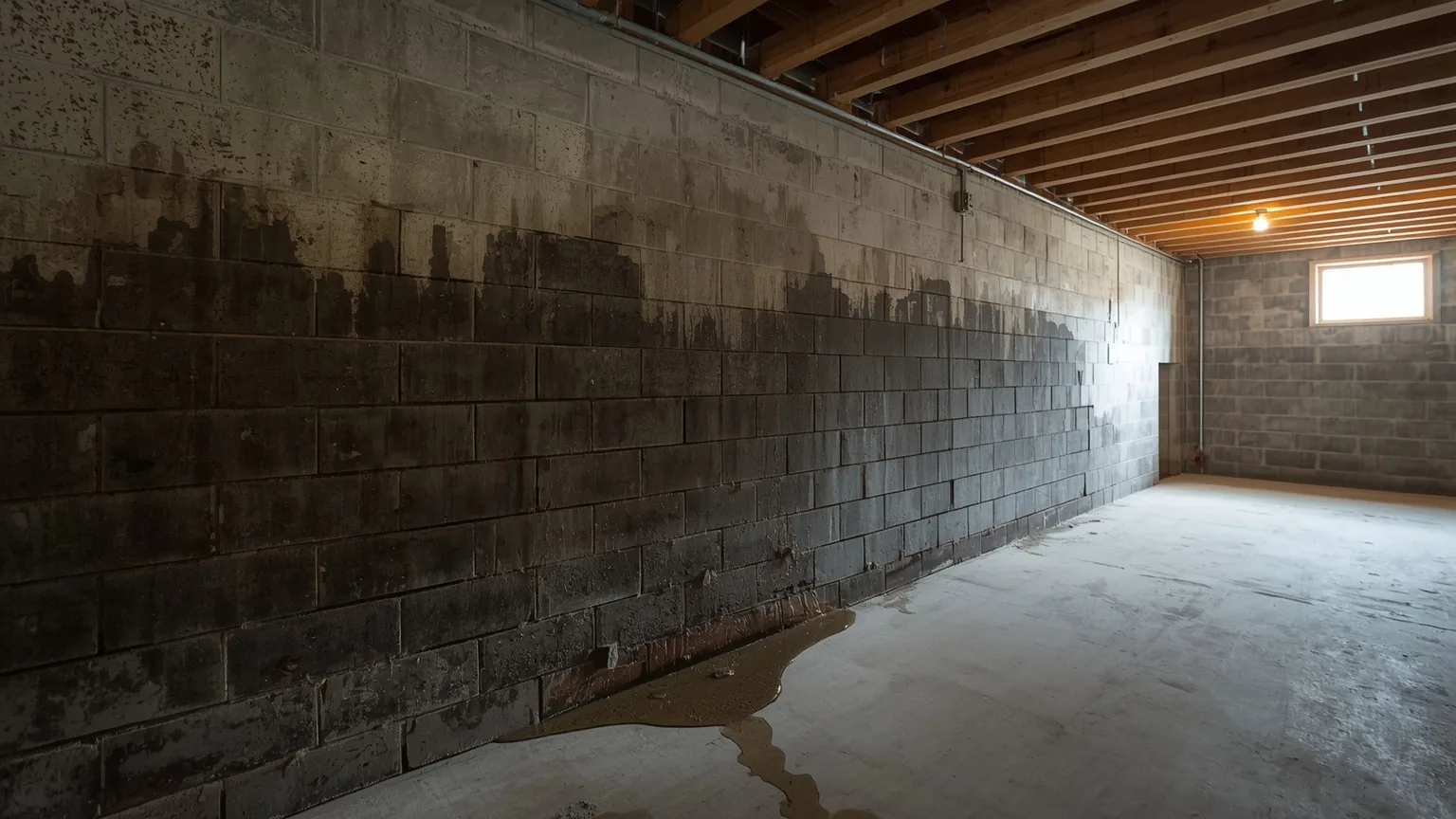
Wet Basement Repair
Green Bay basements leak on a trigger — a heavy rain, a saturated spring, or the thaw week when meltwater runs across frozen ground. Which trigger yours has tells you what the repair costs.
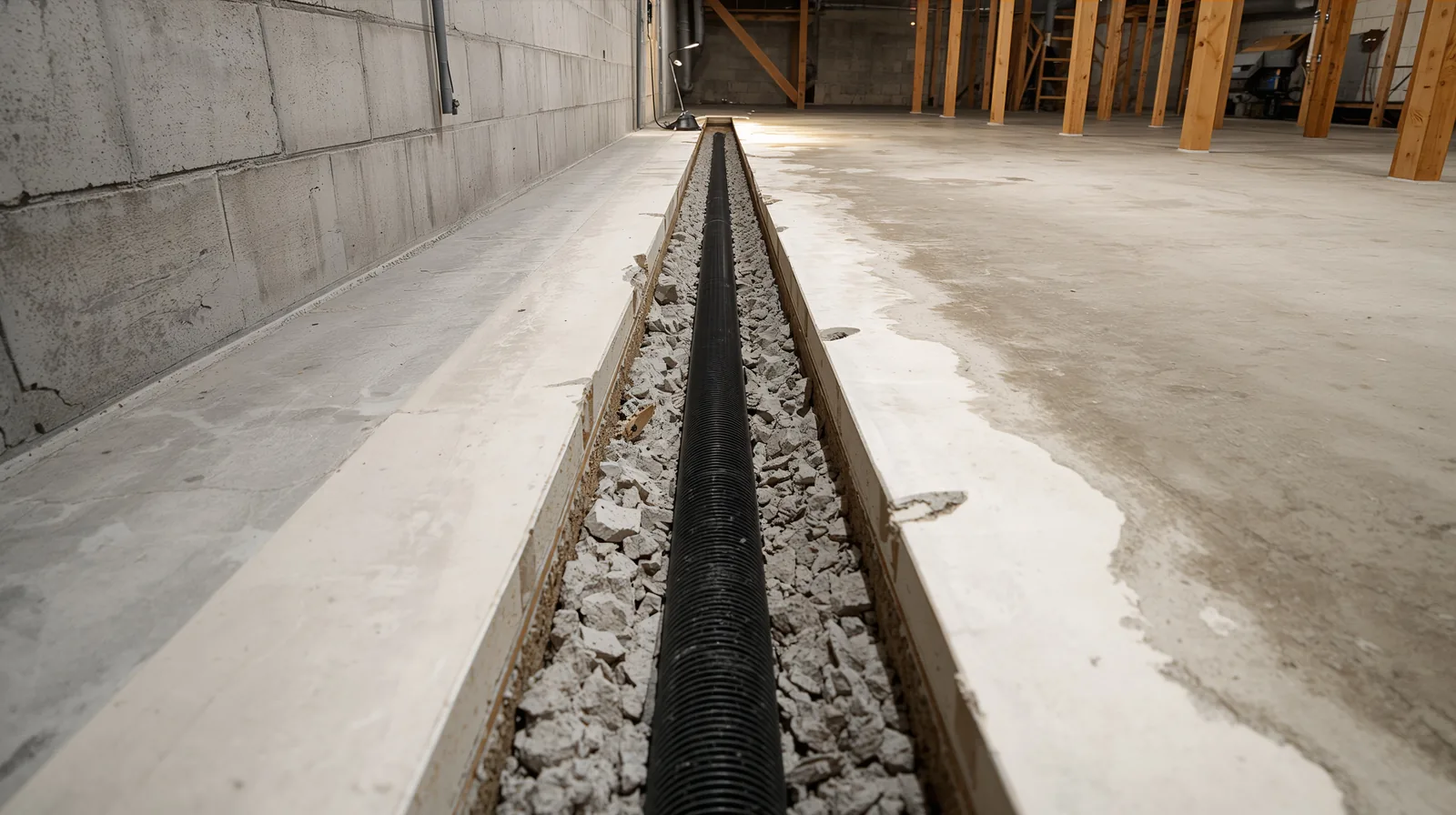
Interior Drain Tile
Interior drain tile is the workhorse repair for Green Bay basements. It relieves the pressure red lake clay creates without excavating the yard — and it can be installed in February.
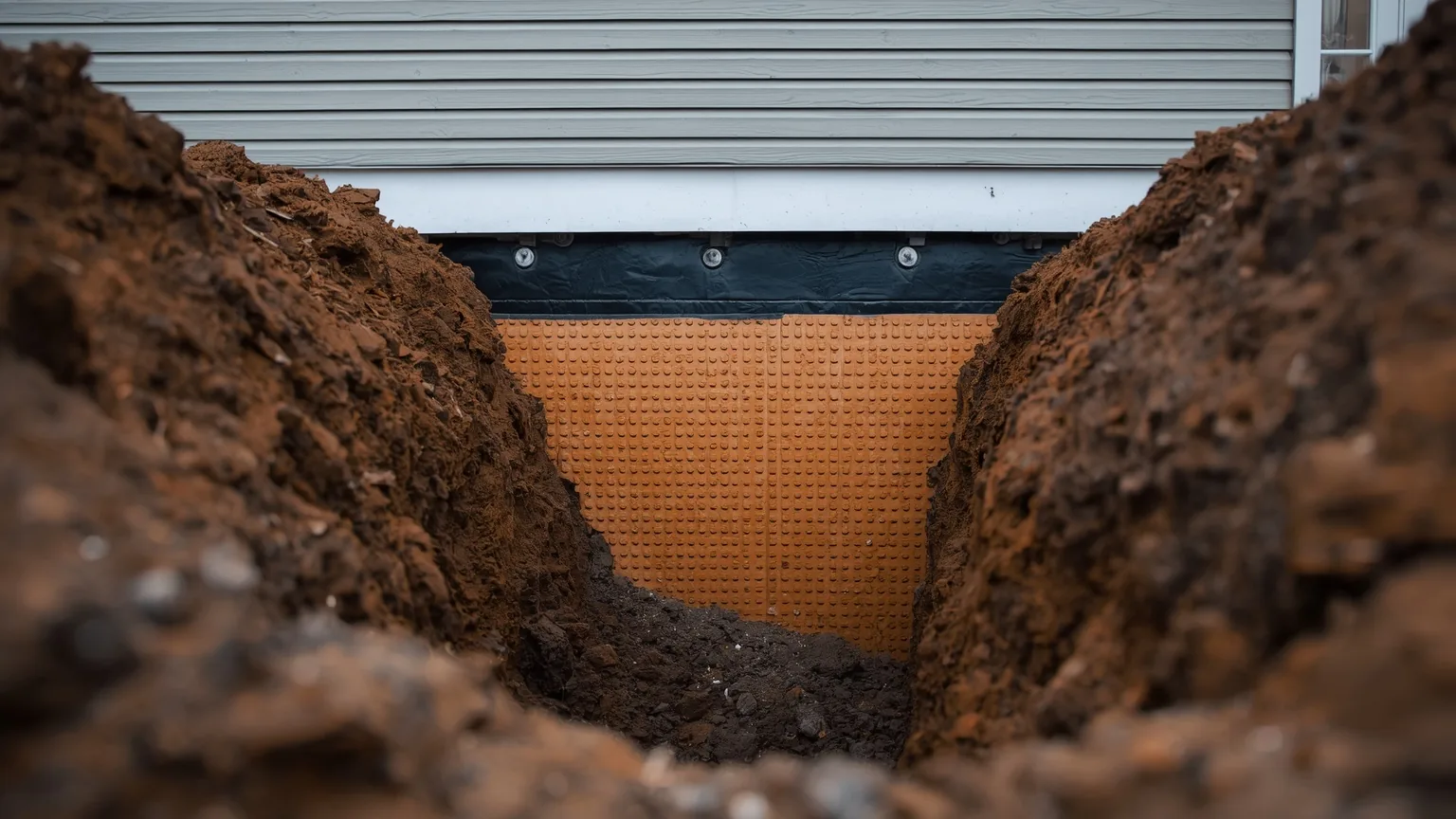
Exterior Basement Waterproofing
Digging to the outside of the wall is the most thorough repair there is. Wisconsin's 48-inch frost rule makes it deeper, costlier and strictly a warm-season job.
Find out what's actually causing it.
A free on-site inspection and a written scope — before any work is quoted.