
Cove joint leak repair in Green Bay
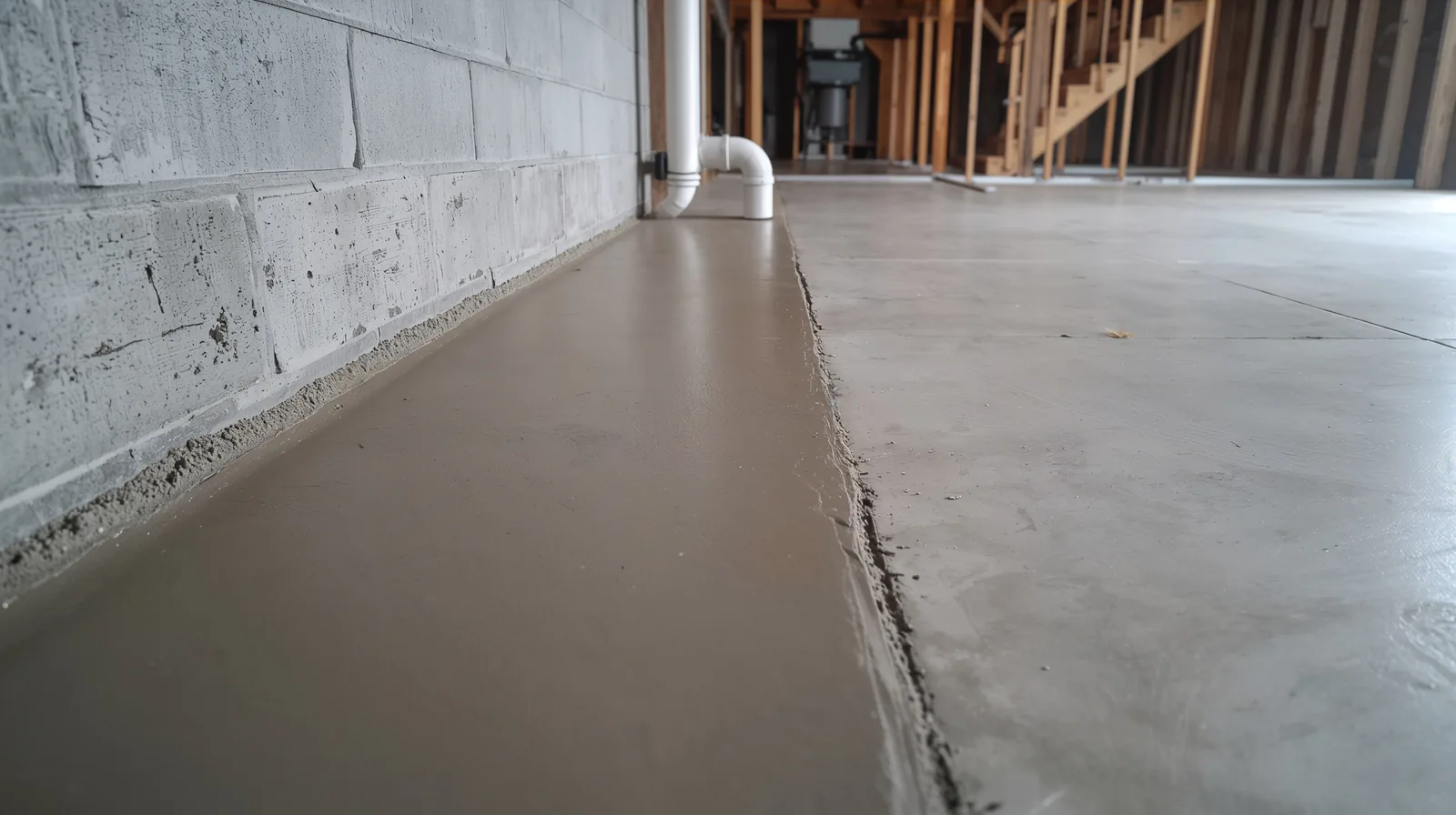
The seam where wall meets floor is the lowest point in the envelope and the first place March meltwater pressure finds. Sealing it moves the leak; it does not stop it.
Who handles cove joint leaks in Green Bay, WI?
Green Bay Basements repairs cove joint leaks in Green Bay with interior drainage that relieves the hydrostatic pressure causing them, rather than sealants that fail against that pressure. Call (920) 545-4548.
- Typical cost: $5,000–$15,000 in Brown County
- Soil: Kewaunee-Manawa-Poygan — silt over 5–20 ft of red lake clay, poor drainage
- Frost depth: 48" — footings and discharge lines must sit below it
- Code: Wisconsin Uniform Dwelling Code (SPS 320-325), administered by the Department of Safety and Professional Services
- Service area: Green Bay and 9 surrounding counties, 45-mile radius
What the cove joint is
Footings and walls are poured first, the floor slab later. The two never bond, so there is a seam running the full perimeter of the basement where wall meets floor. It is not a defect — every poured foundation has one. It is simply the lowest and weakest point in the envelope.
When the water table rises under the slab, that seam is the path of least resistance, and water appears along the base of the wall rather than through it. In Brown County it typically shows up first in the March thaw, when meltwater has loaded the clay and the pressure beneath the floor peaks.
Why sealing it fails
Sealing the joint from inside is the intuitive response and it does not hold. The seam is not the cause — the pressure is. Blocking the seam does not reduce the head under the slab; it just makes the water find the next opening, which might be a floor crack, a different stretch of the same joint, or up through the slab itself.
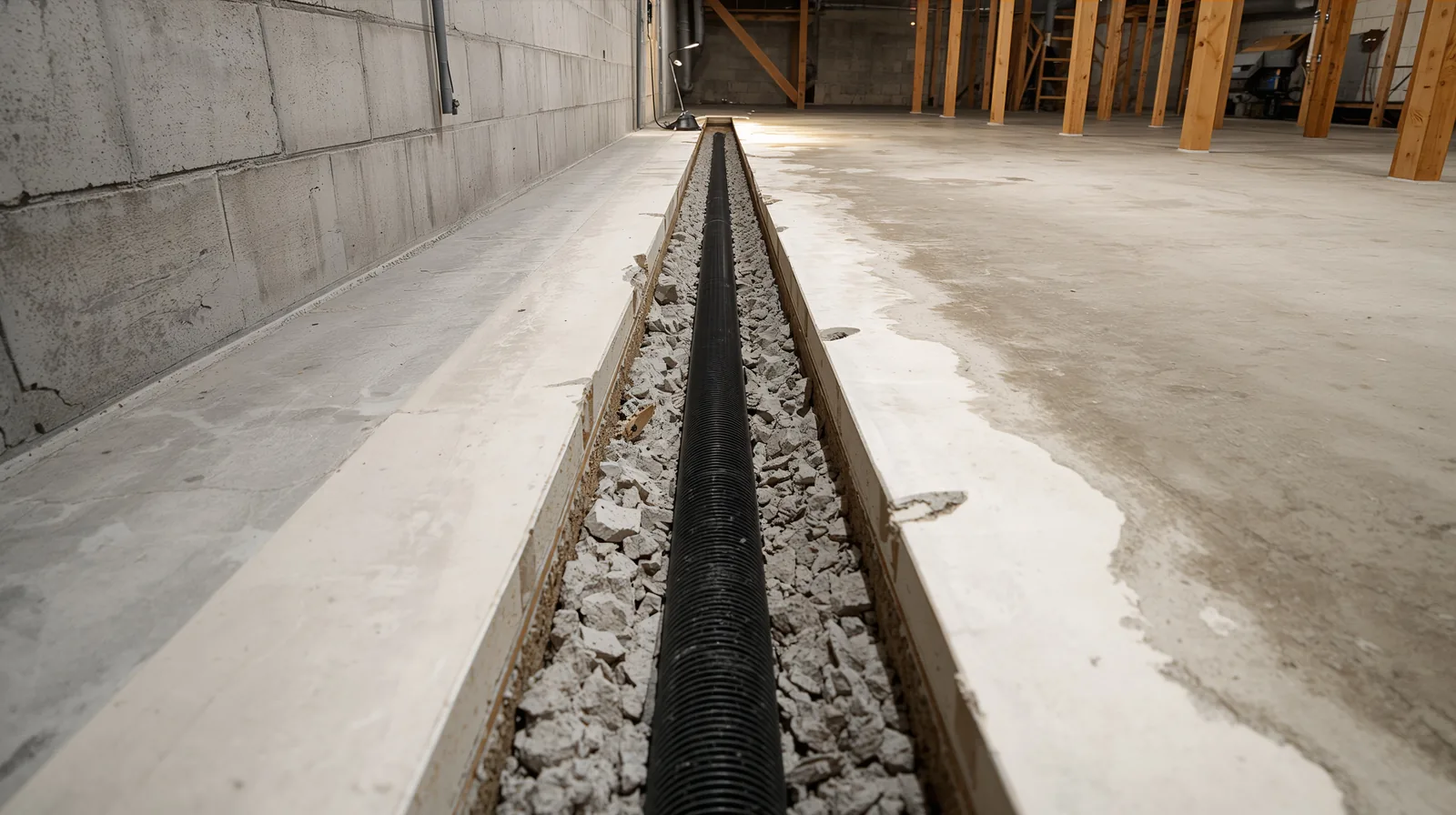
It also tends to make the next diagnosis harder, because the water reappears somewhere new and looks like a different problem. The repair that works is relieving the pressure: interior drain tile at the footing intercepting water before it reaches the joint, discharging to a sealed sump. Once the head beneath the slab is gone, the joint stops passing water because there is nothing pushing through it.
Why Brown County soil drives this
Brown County sits on the Kewaunee-Manawa-Poygan soil association — a thin silty cap over calcareous red clay laid down as lake sediment by Glacial Lake Oshkosh and the Green Bay Lobe. That red clay runs roughly 5 to 20 feet thick across most of the county and is among the least permeable material a foundation can be built into.
The Manawa and Poygan members of that association are rated somewhat poorly and poorly drained — they hold water near the surface instead of passing it down, so a wet spring loads the outside of a foundation wall for weeks at a time rather than days. A saturated clay backfill can exert well over 1,000 lb of lateral force per linear foot against a block wall — enough to bow an 8-inch wall inward with no visible cause outside.
The Fox River mouth and the bay shore keep the water table shallow across the lower East and West sides, and the flat lake plain gives water nowhere to run once the clay above it has taken all it can hold. In the older core neighborhoods the problem compounds — green bay's older neighborhoods — astor, whitney park, navarino, olde north — are dominated by pre-1940 housing on block or rubble foundations built before drain tile was ever required.
Cove Joint Leaks questions
What is the cove joint?
It is the seam where the foundation wall meets the floor slab. Because the two are poured at different times they never bond, leaving a joint around the entire perimeter. Every poured basement has one — it becomes visible only when pressure under the slab pushes water through it.
Can the cove joint just be sealed?
It can be, and it usually relocates the leak rather than stopping it. The joint is the exit, not the cause; the cause is hydrostatic pressure beneath the slab. Seal it and the water uses the next weakest point. Relieve the pressure with drainage and the joint stops leaking on its own.
What does cove joint repair cost?
Because the real repair is interior drainage rather than sealing, the cost tracks the drainage system: $5,000 to $15,000 for a full perimeter with a sump, proportionally less for a single wall where the inspection confirms the water is confined to one run.
Related waterproofing services
Basement Waterproofing
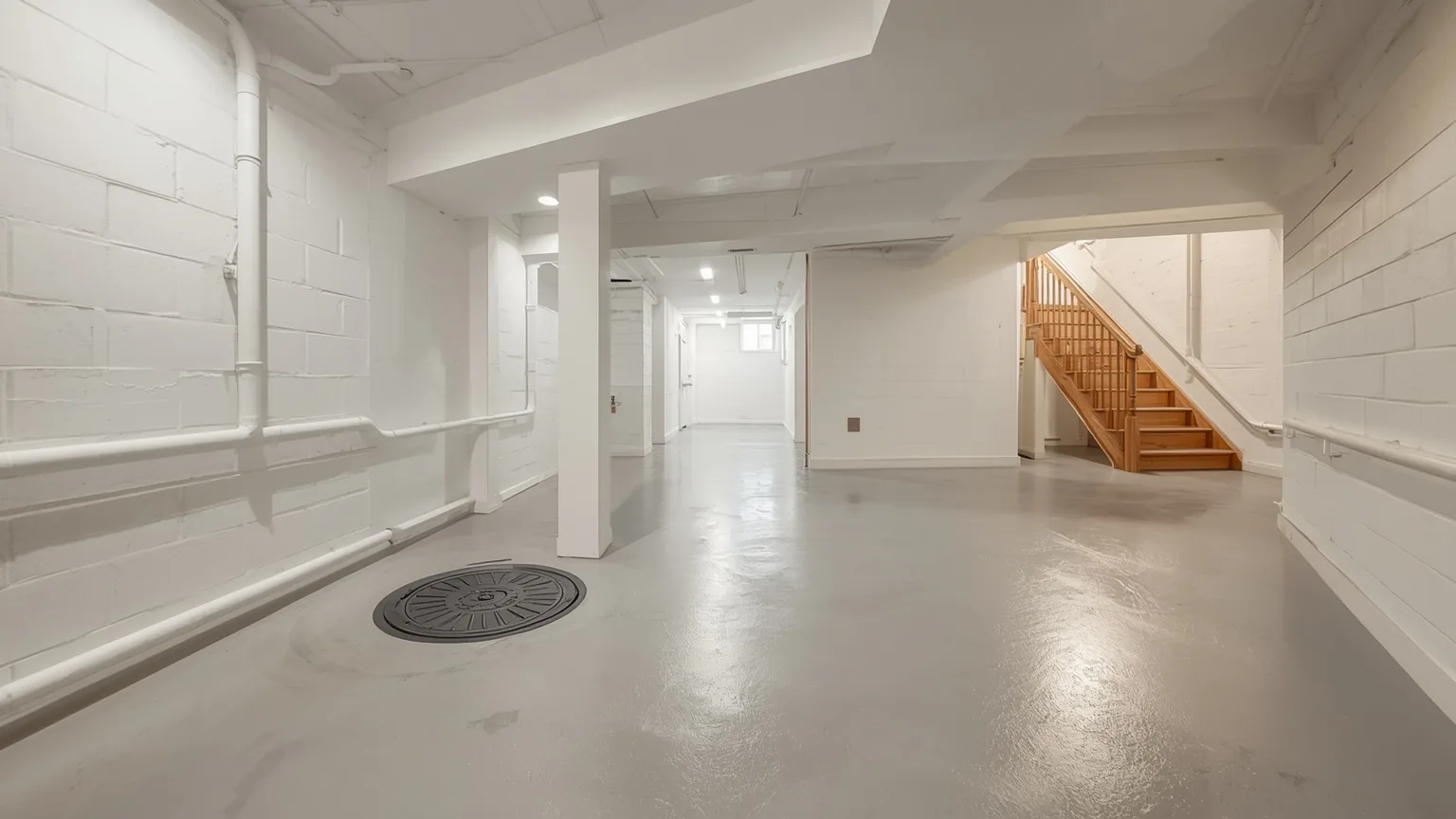
A wet Green Bay basement is a thaw problem before it is a rain problem. Fifty-five inches of snow melts into ground that has been frozen since December, and the red lake clay underneath cannot take it.
Wet Basement Repair
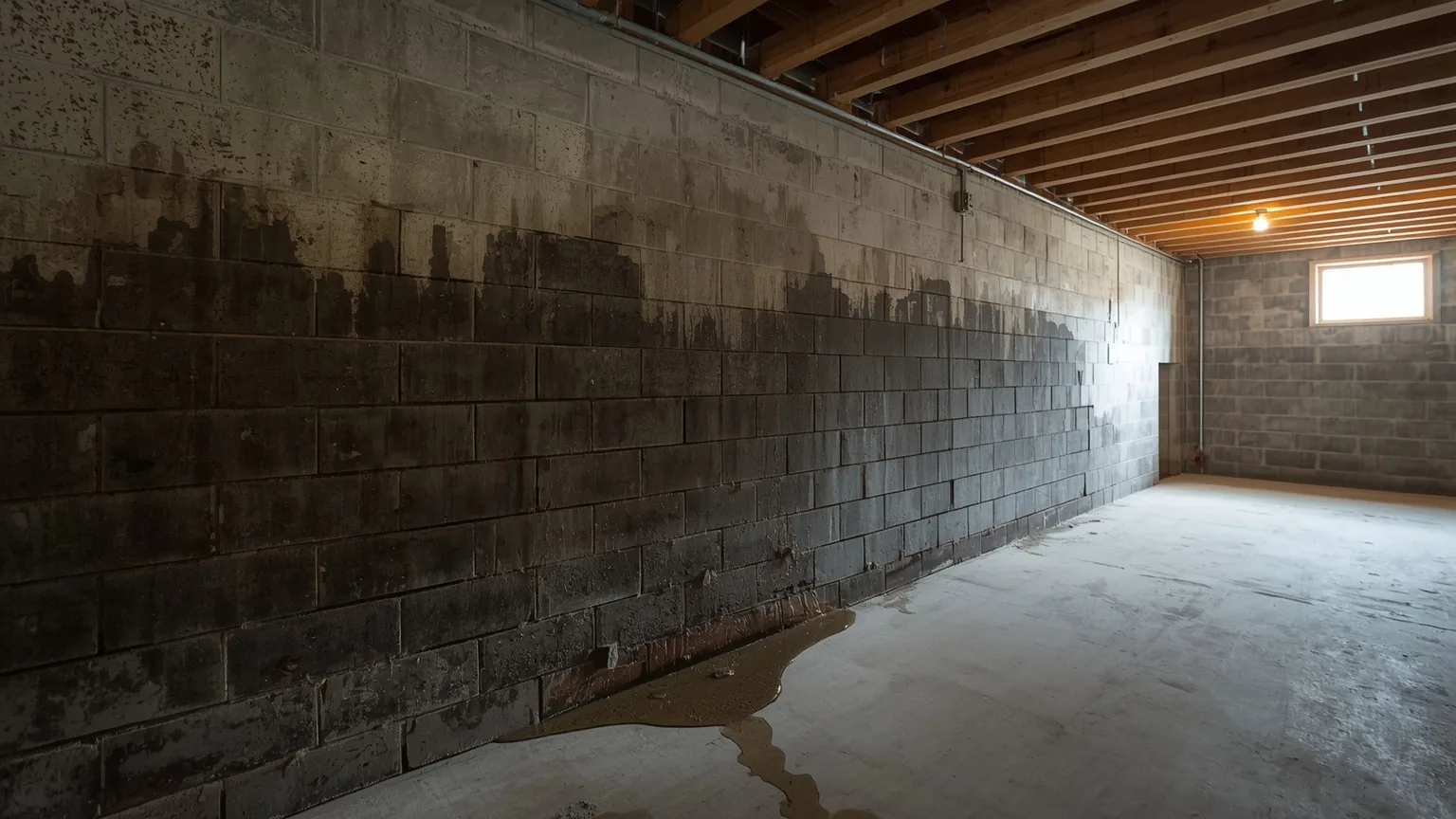
Green Bay basements leak on a trigger — a heavy rain, a saturated spring, or the thaw week when meltwater runs across frozen ground. Which trigger yours has tells you what the repair costs.
Interior Drain Tile
Interior drain tile is the workhorse repair for Green Bay basements. It relieves the pressure red lake clay creates without excavating the yard — and it can be installed in February.
Find out what's actually causing it.
A free on-site inspection and a written scope — before any work is quoted.