
Efflorescence on Green Bay basement walls
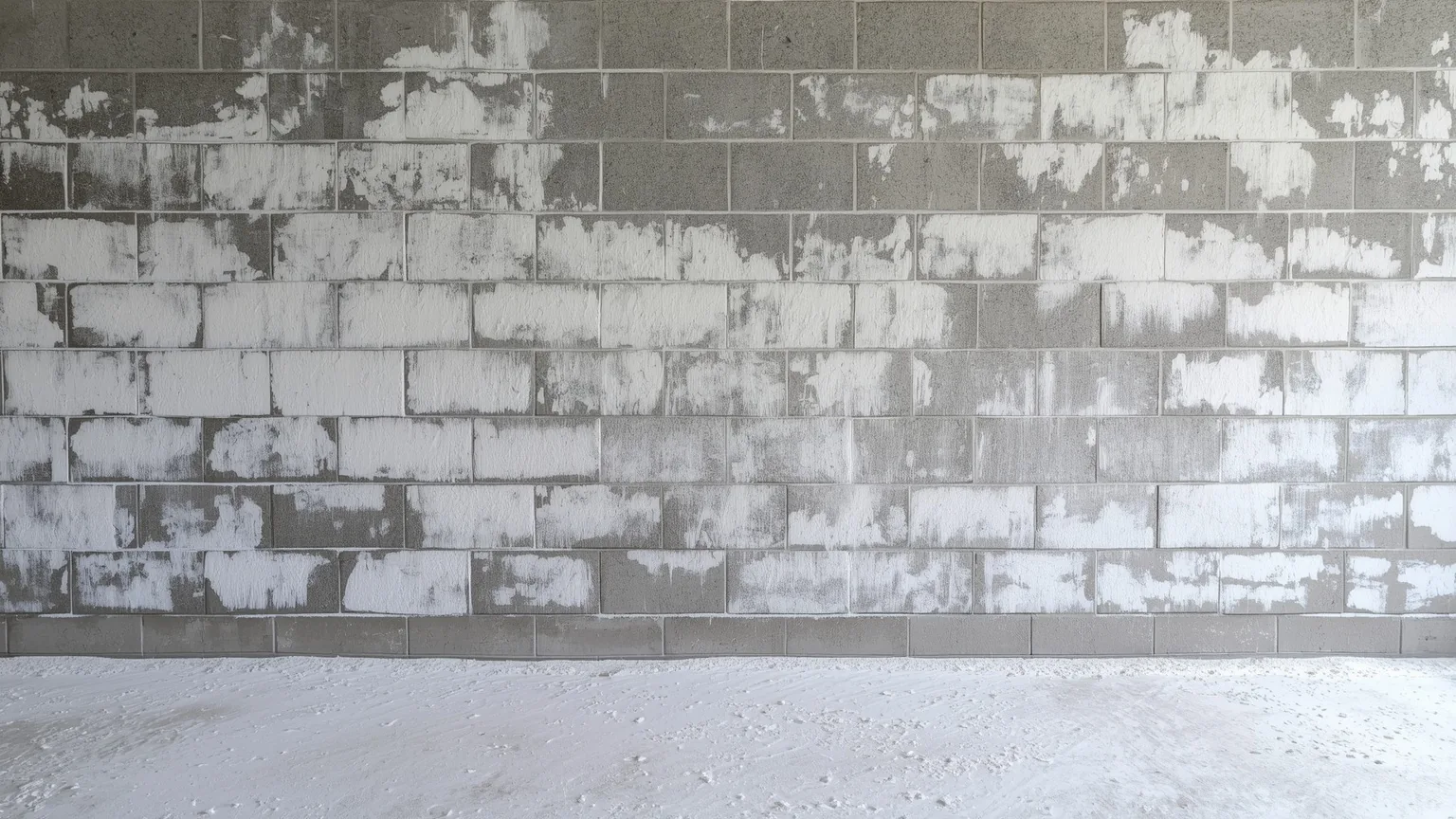
That white crust is mineral salt left behind by water that has already travelled through the block. It is not mold, it is not dangerous, and it is a free moisture meter.
Who handles efflorescence & wall staining in Green Bay, WI?
Green Bay Basements identifies and addresses efflorescence on Green Bay basement walls by tracing the moisture path through the masonry and stopping it, rather than repeatedly cleaning the deposit. Call (920) 545-4548.
- Typical cost: $400–$12,000 in Brown County
- Soil: Kewaunee-Manawa-Poygan — silt over 5–20 ft of red lake clay, poor drainage
- Frost depth: 48" — footings and discharge lines must sit below it
- Code: Wisconsin Uniform Dwelling Code (SPS 320-325), administered by the Department of Safety and Professional Services
- Service area: Green Bay and 9 surrounding counties, 45-mile radius
What it is telling you
Efflorescence is mineral salt. Water moves through concrete or block, dissolves salts inside the masonry, and carries them to the surface. The water evaporates and the salt is left as a white crystalline bloom. Its presence is proof that water is moving through the wall, not merely sitting against it.
The pattern is informative. A band low on the wall points at rising damp from the footing or the cove joint. A patch around a crack shows you the crack is active even when it is dry the day you look at it. Heavy deposition after a Green Bay spring is normal on an untreated wall, because the thaw is when the clay is most saturated and most water is being driven through.
Cleaning versus fixing
Cleaning it is straightforward — a stiff brush for light deposits, a masonry cleaner or dilute acid wash for heavy ones, with ventilation and eye protection. It will come back, on the same schedule as the water, usually the following spring.
That recurrence is the useful part. Efflorescence is a free moisture meter. Clean the wall, date it, and see what returns and where — that tells you which sections of wall are actively passing water and gives a contractor far better information than a general complaint of dampness.
Painting over it fails, and fails in a way that makes things worse. Salt continues to crystallise behind the coating and the pressure pushes the paint off the wall, taking a layer of masonry surface with it. Any coating has to wait until the water is controlled and the wall has dried.
Why Brown County soil drives this
Brown County sits on the Kewaunee-Manawa-Poygan soil association — a thin silty cap over calcareous red clay laid down as lake sediment by Glacial Lake Oshkosh and the Green Bay Lobe. That red clay runs roughly 5 to 20 feet thick across most of the county and is among the least permeable material a foundation can be built into.
The Manawa and Poygan members of that association are rated somewhat poorly and poorly drained — they hold water near the surface instead of passing it down, so a wet spring loads the outside of a foundation wall for weeks at a time rather than days. A saturated clay backfill can exert well over 1,000 lb of lateral force per linear foot against a block wall — enough to bow an 8-inch wall inward with no visible cause outside.
The Fox River mouth and the bay shore keep the water table shallow across the lower East and West sides, and the flat lake plain gives water nowhere to run once the clay above it has taken all it can hold. In the older core neighborhoods the problem compounds — green bay's older neighborhoods — astor, whitney park, navarino, olde north — are dominated by pre-1940 housing on block or rubble foundations built before drain tile was ever required.
Efflorescence & Wall Staining questions
Is efflorescence dangerous?
Not in itself — it is mineral salt, not a biological growth, and it is not a health hazard. What it indicates matters, though: water is actively moving through the masonry. The same moisture that deposits efflorescence supports mold on any organic material nearby, so it is a signal worth acting on even though the deposit is harmless.
How do I tell efflorescence from mold?
Efflorescence is crystalline and gritty, dissolves in water, and sits on top of the surface — you can brush it off. Mold is fuzzy or slimy, is usually darker, smears rather than dissolves, and often smells. If a drop of water makes the white deposit disappear, it is efflorescence.
Will painting over it work?
No, and it will damage the wall. Salt keeps crystallising behind the paint and the pressure lifts the coating off, often bringing masonry surface with it. Control the water first, let the wall dry fully, clean the deposit, and only then consider a coating — and understand that a coating is cosmetic rather than a repair.
Related basement services
Egress Window Installation
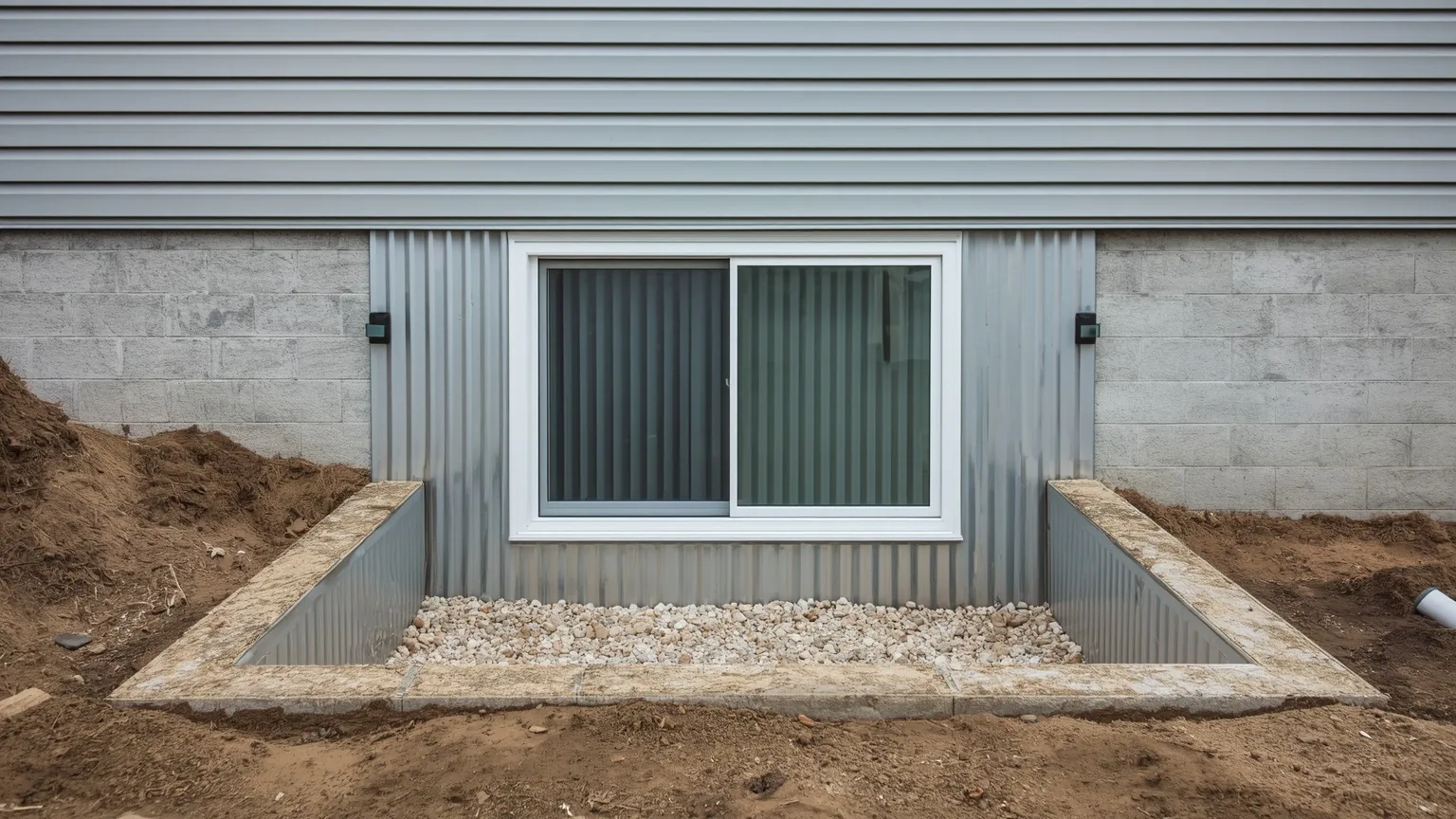
If a basement bedroom does not have a compliant escape opening, it is not legally a bedroom — which matters for safety, for permits, and for what you can put on the Real Estate Condition Report when you sell.
Vapor Barrier Installation
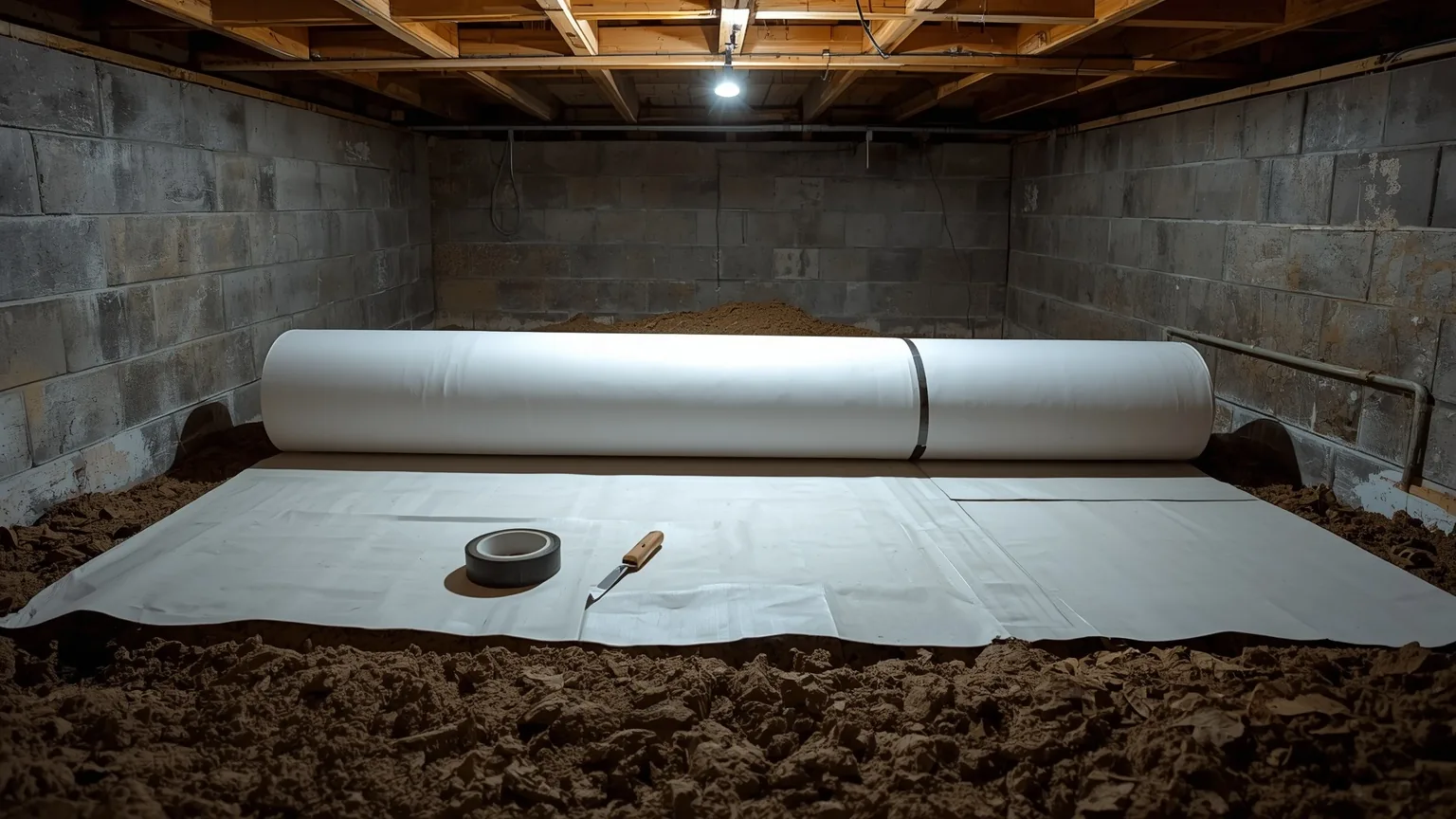
Concrete and bare soil both pass water vapor continuously. A vapor barrier is what stops the ground humidifying the house above it — a bigger factor in a Wisconsin winter than most people expect.
Find out what's actually causing it.
A free on-site inspection and a written scope — before any work is quoted.