
Vapor barrier installation in Green Bay
Concrete and bare soil both pass water vapor continuously. A vapor barrier is what stops the ground humidifying the house above it — a bigger factor in a Wisconsin winter than most people expect.
Who handles vapor barrier installation in Green Bay, WI?
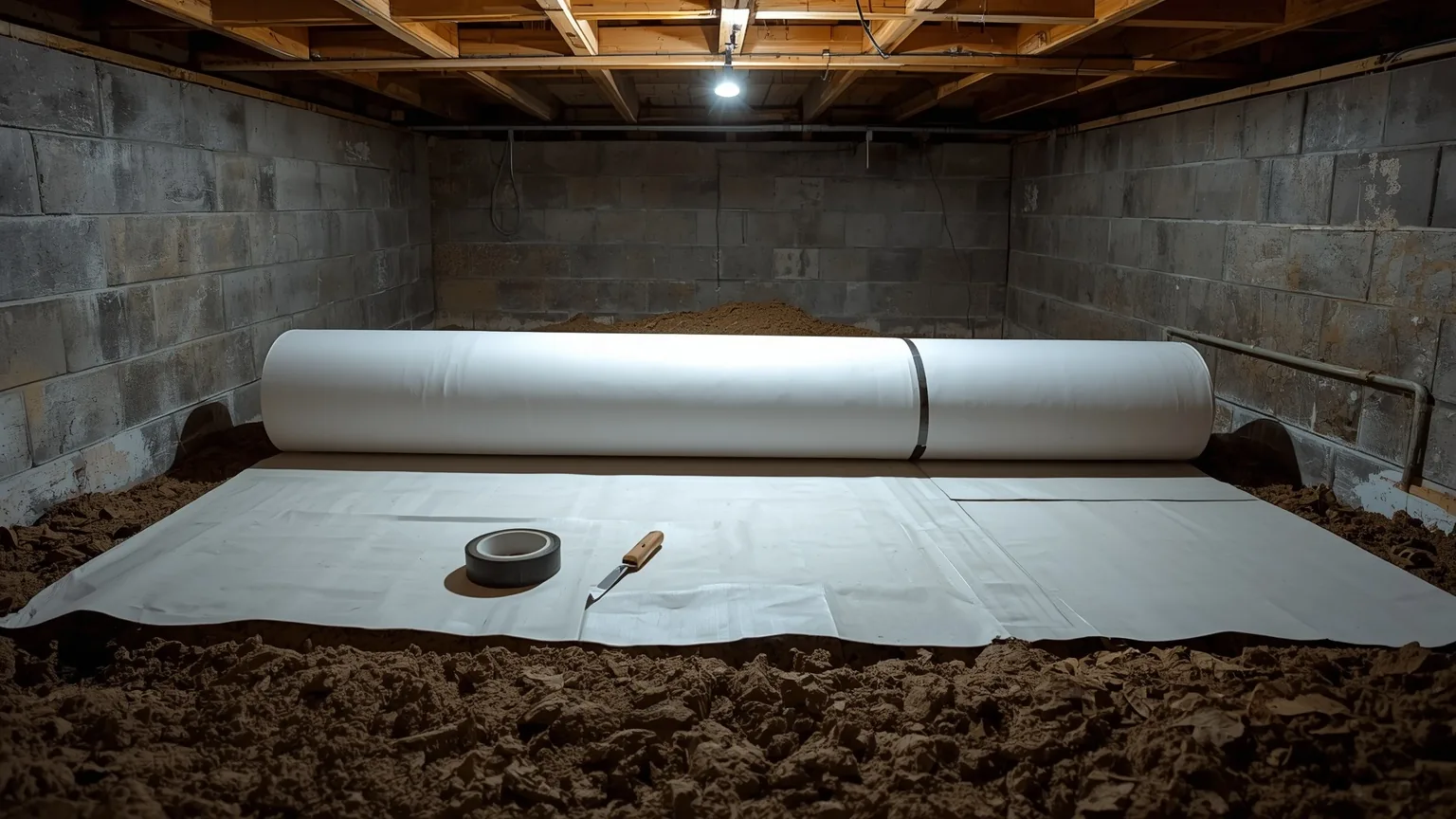
Green Bay Basements installs sealed vapor barriers in Green Bay basements and crawl spaces — reinforced liner across soil and up walls, seams taped, to stop ground moisture entering the structure. Call (920) 545-4548.
- Typical cost: $400–$4,000 in Brown County
- Soil: Kewaunee-Manawa-Poygan — silt over 5–20 ft of red lake clay, poor drainage
- Frost depth: 48" — footings and discharge lines must sit below it
- Code: Wisconsin Uniform Dwelling Code (SPS 320-325), administered by the Department of Safety and Professional Services
- Service area: Green Bay and 9 surrounding counties, 45-mile radius
Vapor is not the same as water
A basement or crawl space can be entirely free of liquid water and still be the wettest part of a house. Soil gives off moisture as vapor around the clock, and uncovered ground in a crawl space can release gallons a day into the air above it. There is no leak to find and no puddle to see.
In Northeast Wisconsin that vapor has somewhere to go. The stack effect drives air upward through a house, and it drives it hardest when the inside-outside temperature difference is greatest — a January night. So the season the ground is releasing moisture into a sealed-up house is the season the house is pulling hardest from below. Musty smells upstairs in deep winter usually start below the floor.
Specification matters
Thickness and reinforcement decide whether this lasts. Builder's poly at 6 mil tears during installation and punctures with any traffic afterwards. Reinforced liner from 10 to 20 mil holds up, and anywhere anyone will ever crawl or store anything, the heavier end is worth the difference.
Installation is where most barriers fail. Coverage has to be continuous — across the entire ground, up the foundation walls, seams taped, edges mechanically fastened and sealed to the wall. A sheet laid loose over the dirt with gaps at the perimeter accomplishes very little, because the vapor simply travels around it.
One caution specific to wet ground: a barrier over saturated soil traps water beneath it rather than excluding it. Where groundwater is present the liner goes in alongside drainage and a sump, not instead of them.
Why Brown County soil drives this
Brown County sits on the Kewaunee-Manawa-Poygan soil association — a thin silty cap over calcareous red clay laid down as lake sediment by Glacial Lake Oshkosh and the Green Bay Lobe. That red clay runs roughly 5 to 20 feet thick across most of the county and is among the least permeable material a foundation can be built into.
The Manawa and Poygan members of that association are rated somewhat poorly and poorly drained — they hold water near the surface instead of passing it down, so a wet spring loads the outside of a foundation wall for weeks at a time rather than days. A saturated clay backfill can exert well over 1,000 lb of lateral force per linear foot against a block wall — enough to bow an 8-inch wall inward with no visible cause outside.
The Fox River mouth and the bay shore keep the water table shallow across the lower East and West sides, and the flat lake plain gives water nowhere to run once the clay above it has taken all it can hold. In the older core neighborhoods the problem compounds — green bay's older neighborhoods — astor, whitney park, navarino, olde north — are dominated by pre-1940 housing on block or rubble foundations built before drain tile was ever required.
Vapor Barrier Installation questions
Do I need a vapor barrier if my basement is dry?
If the space has exposed soil, yes. Dry refers to liquid water; vapor is a separate and continuous process, and bare ground can put gallons a day into the air. In a Wisconsin winter the stack effect carries that straight up into the living space, which is why the symptom often shows as an upstairs humidity or odor problem rather than a visibly wet basement.
What thickness should be used?
Reinforced liner of 10 to 20 mil for anything that has to last. The 6 mil builder's poly commonly used tears during installation and punctures under any traffic. If the space will be entered for storage or utility access, use the heavier end — the material cost difference is small against the labor of doing it twice.
Does a vapor barrier replace waterproofing?
No. A vapor barrier stops moisture in vapor form; it does nothing about liquid water arriving under pressure. Installed over saturated ground it can make matters worse by trapping water beneath it. Where groundwater is present, the barrier is one component alongside drainage and a sump.
Related basement services
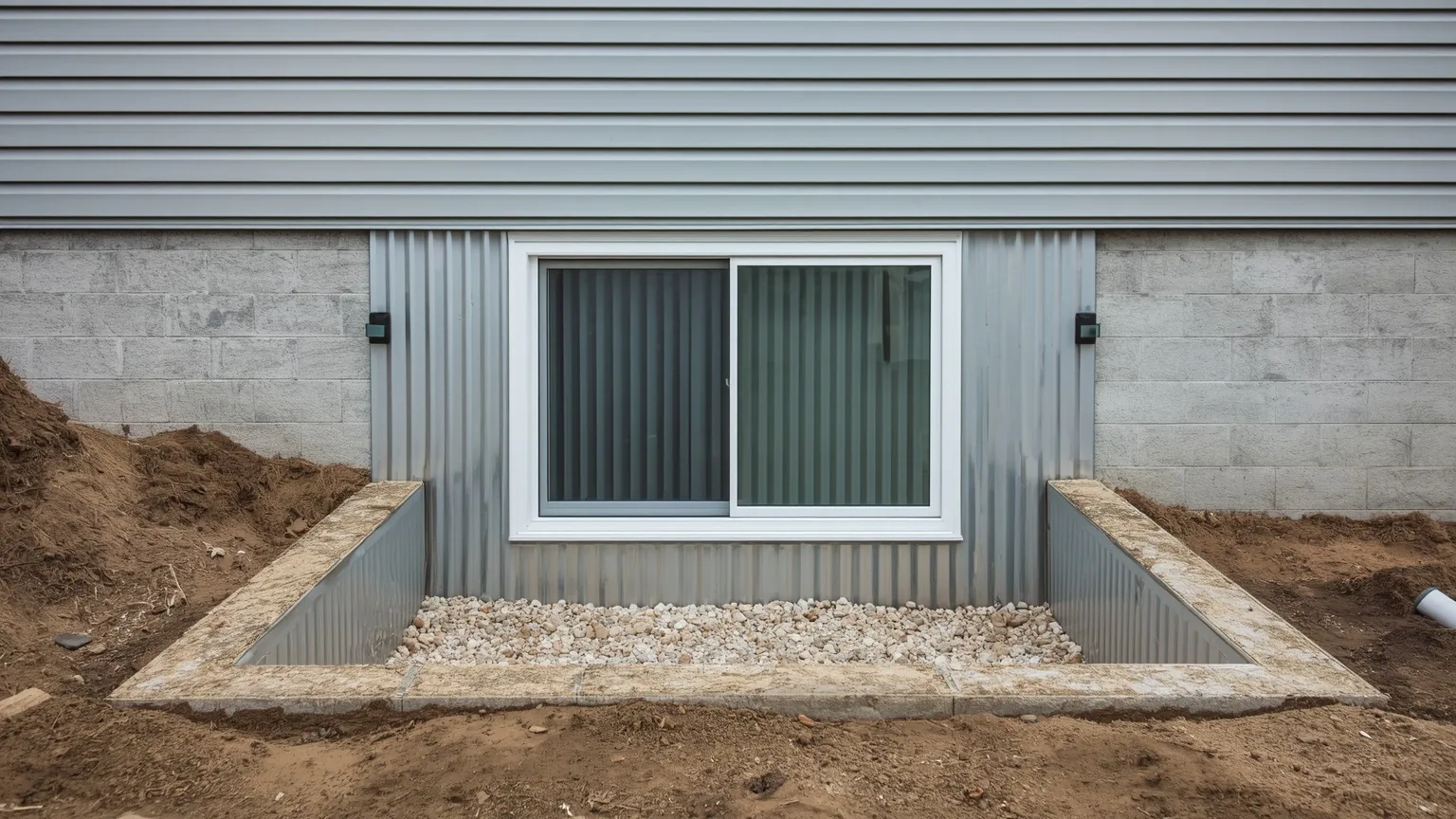
Egress Window Installation
If a basement bedroom does not have a compliant escape opening, it is not legally a bedroom — which matters for safety, for permits, and for what you can put on the Real Estate Condition Report when you sell.
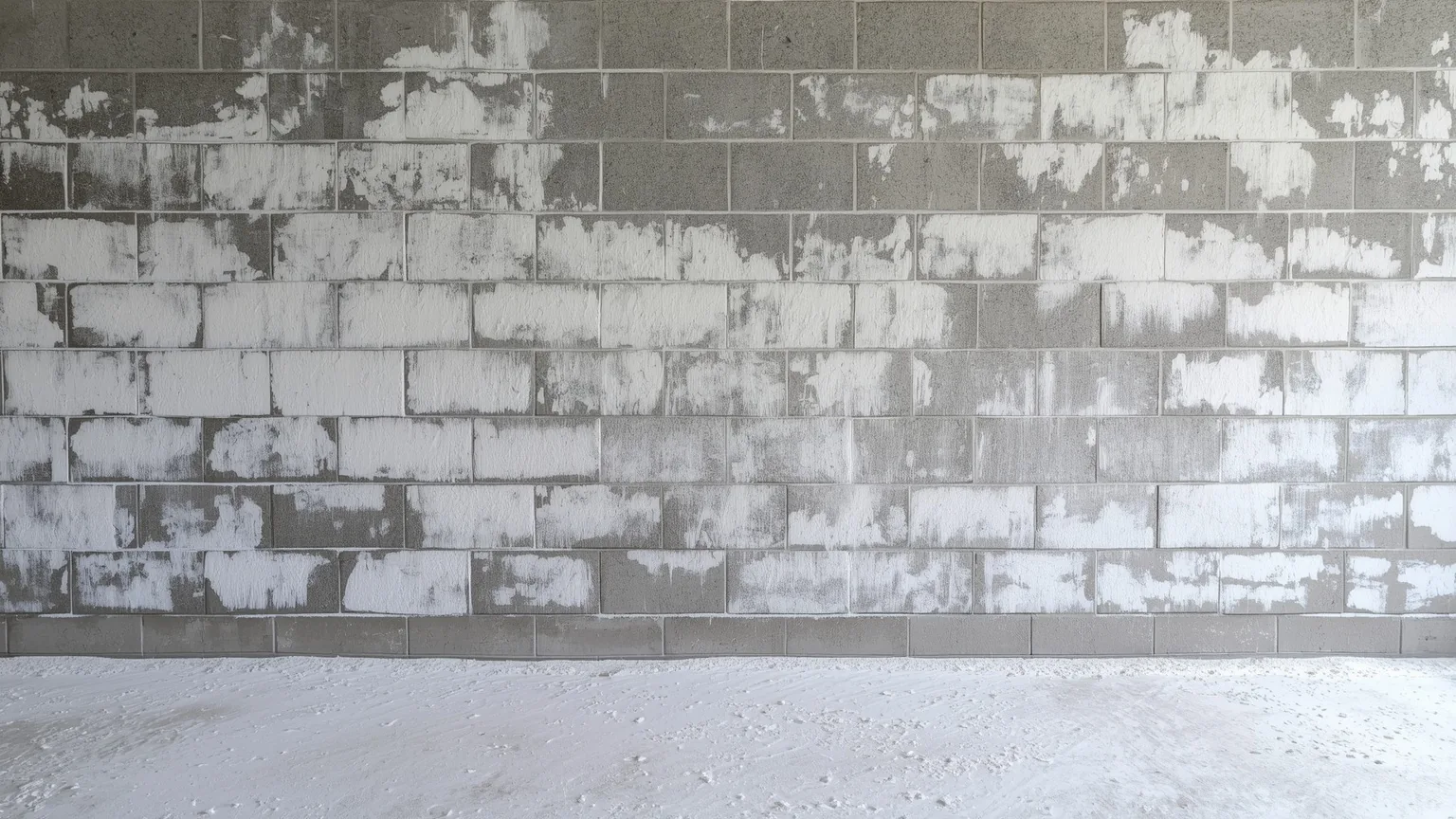
Efflorescence & Wall Staining
That white crust is mineral salt left behind by water that has already travelled through the block. It is not mold, it is not dangerous, and it is a free moisture meter.
Find out what's actually causing it.
A free on-site inspection and a written scope — before any work is quoted.