
Basement mold and musty odor in Green Bay
A cold Wisconsin basement hides the smell most of the year. Then the house closes up for winter, the stack effect turns on, and something that has been growing since April becomes a January problem upstairs.
Who handles basement mold & odor in Green Bay, WI?
Green Bay Basements addresses basement mold and musty odor in Green Bay by locating and eliminating the moisture source first, then removing colonized materials and stabilizing humidity. Call (920) 545-4548.
- Typical cost: $3,000–$12,000 in Brown County
- Soil: Kewaunee-Manawa-Poygan — silt over 5–20 ft of red lake clay, poor drainage
- Frost depth: 48" — footings and discharge lines must sit below it
- Code: Wisconsin Uniform Dwelling Code (SPS 320-325), administered by the Department of Safety and Professional Services
- Service area: Green Bay and 9 surrounding counties, 45-mile radius
Why the smell comes back
Mold needs moisture and something organic. Kill the colony and leave the moisture and it returns, because the conditions that grew it are unchanged. That is why remediation alone fails and why any honest scope starts with where the water is coming from.
Green Bay houses hide this longer than warmer climates do. A cold basement suppresses the smell for much of the year, and then the house closes up for a Wisconsin winter, the stack effect pulls basement air upward through the whole building, and in January people notice an upstairs smell that has been growing downstairs since April. The colony is not new. The ventilation changed.
What has to come out
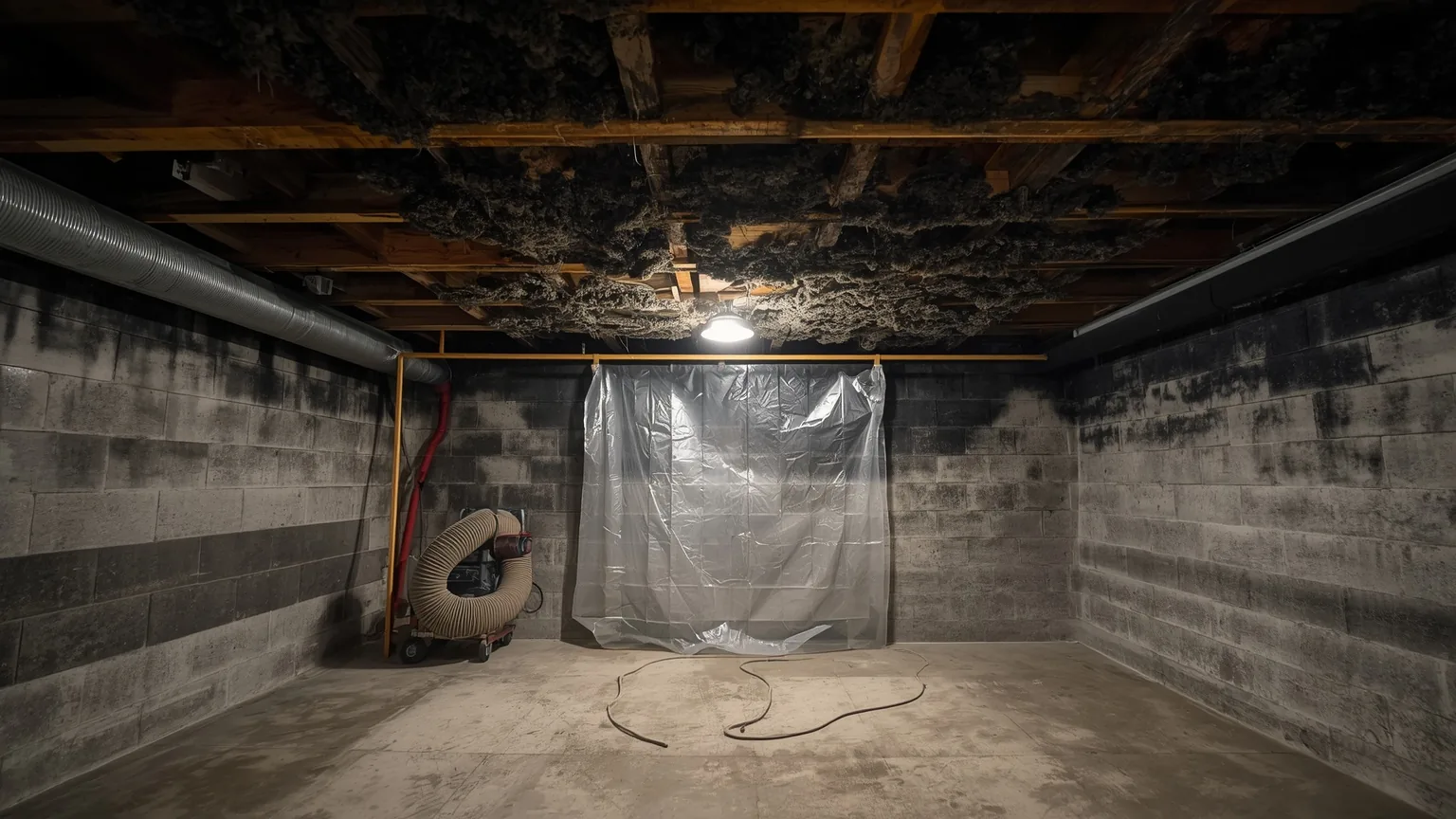
Porous material that has been wet does not get cleaned — it gets removed. Drywall wicks water well above the visible line, insulation holds it, carpet pad is a reservoir, and stored cardboard is both food and shelter. Non-porous surfaces like block, concrete and framing lumber can usually be cleaned and dried in place.
Containment matters during removal, because disturbing a colony makes it airborne and the stack effect then distributes it through the house. Plastic barriers, negative air with a scrubber, and controlled removal are what keep a basement problem from becoming a whole-house problem.
Then the moisture. Drainage if it is groundwater, a dehumidifier sized for the space if it is humidity, and encapsulation if it is a crawl space feeding the floor above. Remediation without that step is a cleaning, not a repair.
Why Brown County soil drives this
Brown County sits on the Kewaunee-Manawa-Poygan soil association — a thin silty cap over calcareous red clay laid down as lake sediment by Glacial Lake Oshkosh and the Green Bay Lobe. That red clay runs roughly 5 to 20 feet thick across most of the county and is among the least permeable material a foundation can be built into.
The Manawa and Poygan members of that association are rated somewhat poorly and poorly drained — they hold water near the surface instead of passing it down, so a wet spring loads the outside of a foundation wall for weeks at a time rather than days. A saturated clay backfill can exert well over 1,000 lb of lateral force per linear foot against a block wall — enough to bow an 8-inch wall inward with no visible cause outside.
The Fox River mouth and the bay shore keep the water table shallow across the lower East and West sides, and the flat lake plain gives water nowhere to run once the clay above it has taken all it can hold. In the older core neighborhoods the problem compounds — green bay's older neighborhoods — astor, whitney park, navarino, olde north — are dominated by pre-1940 housing on block or rubble foundations built before drain tile was ever required.
Basement Mold & Odor questions
Why does my basement smell musty even though it's dry?
Because something is still holding moisture even if the floor looks dry. Common culprits are carpet pad, the back face of finished walls, framing behind drywall, and stored cardboard. Relative humidity above roughly 60 percent will also sustain growth with no liquid water present at all — which is common in a closed-up Wisconsin basement in mid-winter.
Can I just clean the mold myself?
A small surface patch on a non-porous surface, yes, with proper protection. Anything widespread, anything behind finished walls, or anything on porous material needs containment and controlled removal — disturbing it without containment puts spores into an air current that runs straight up through your house. And cleaning never addresses the water that grew it.
Will waterproofing fix the smell?
Usually, if water was the cause and the affected porous material is removed. Once the source is cut and the space dries, the odor generally goes with it. If it persists in a dry basement, something is still holding moisture or the source is a crawl space rather than the basement itself.
Related emergency services
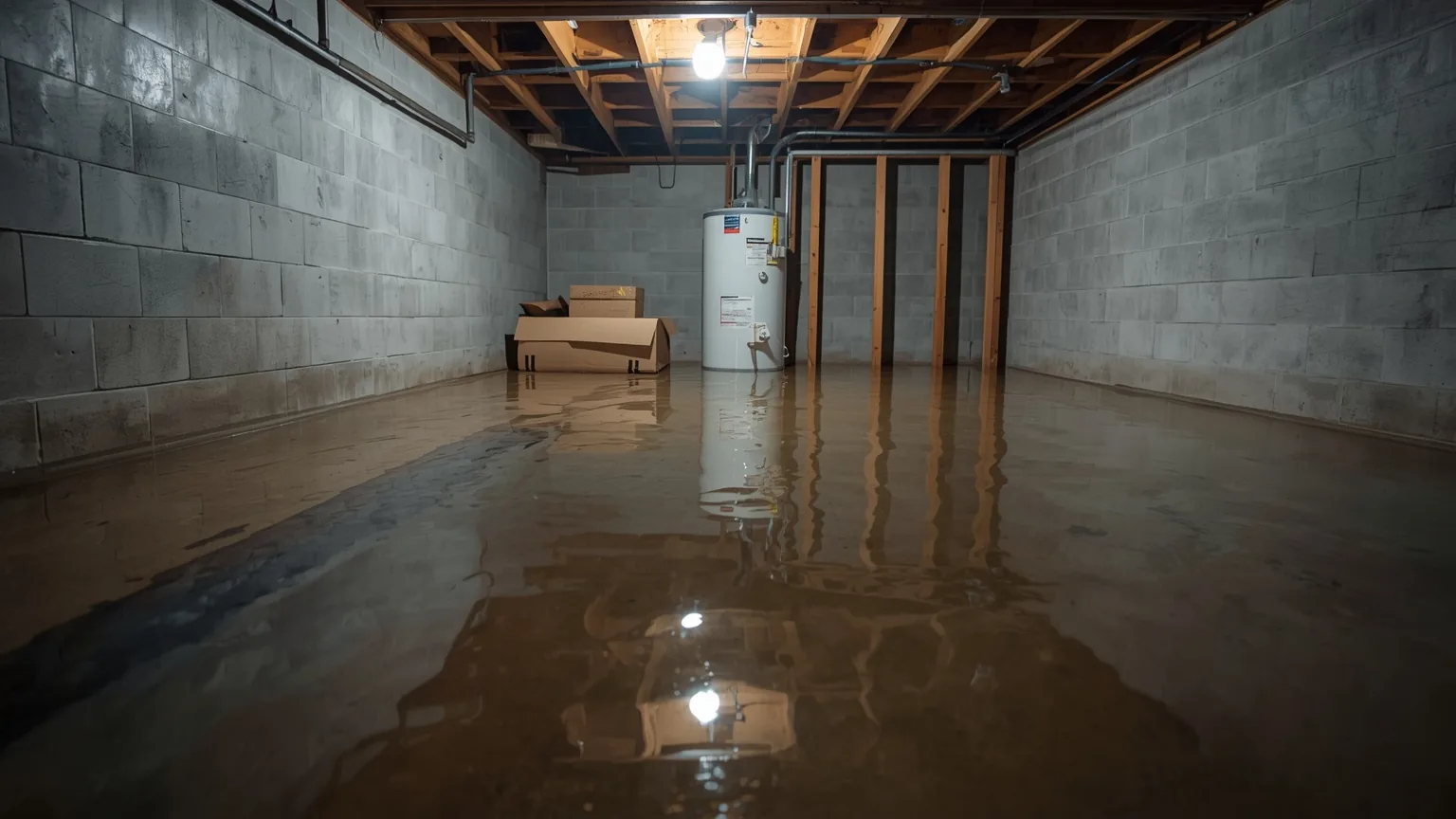
Flooded Basement Cleanup
A flooded basement is two problems at once: the water in front of you, and whatever let it in. In Green Bay both usually arrive in the same three weeks of spring.
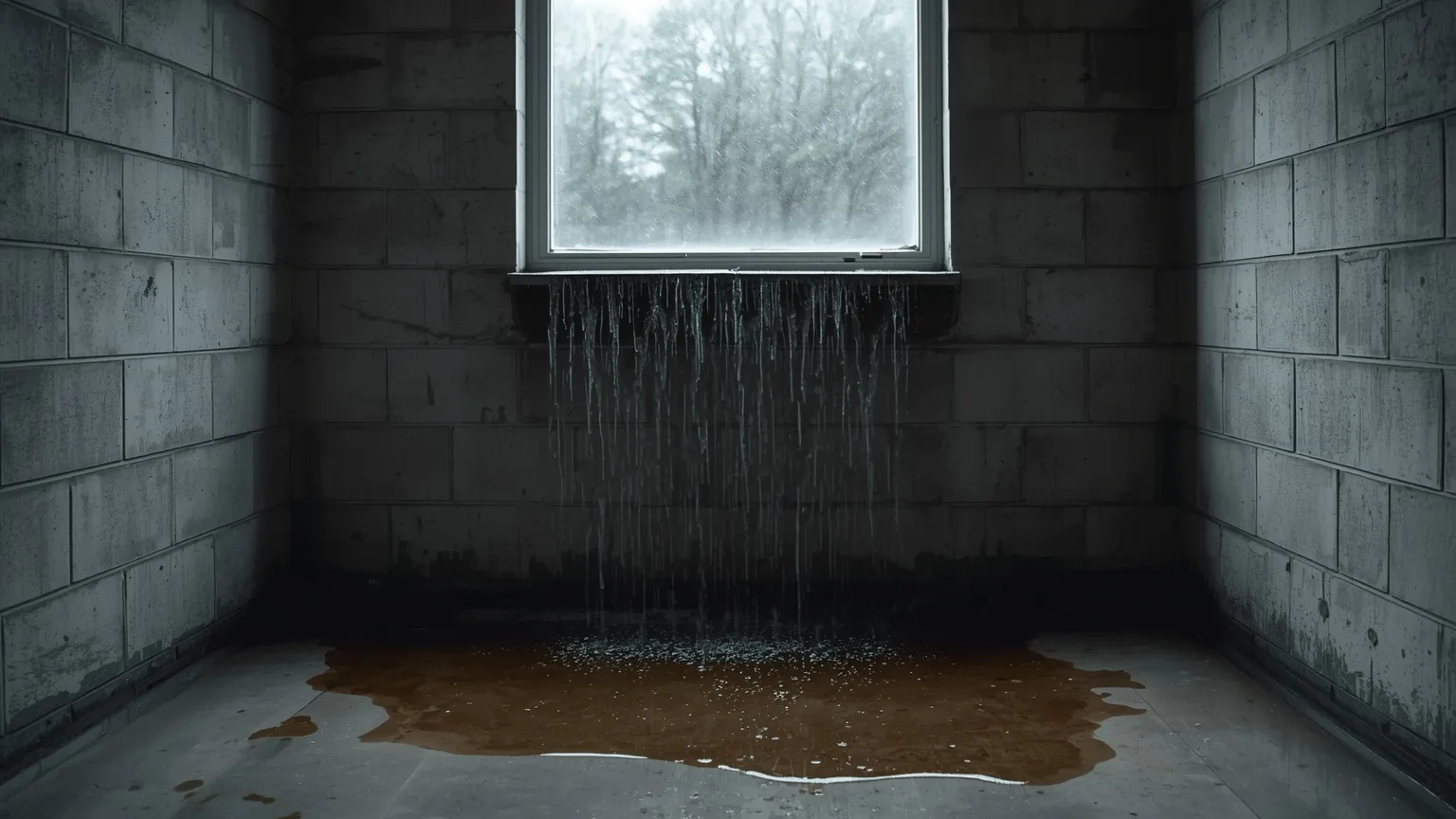
Water After Rain
How long after the rain the water shows up is the most useful free diagnostic you have. In Green Bay there is a third pattern too — water during the thaw, with no rain at all.
Find out what's actually causing it.
A free on-site inspection and a written scope — before any work is quoted.