
Flooded basement help in Green Bay
A flooded basement is two problems at once: the water in front of you, and whatever let it in. In Green Bay both usually arrive in the same three weeks of spring.
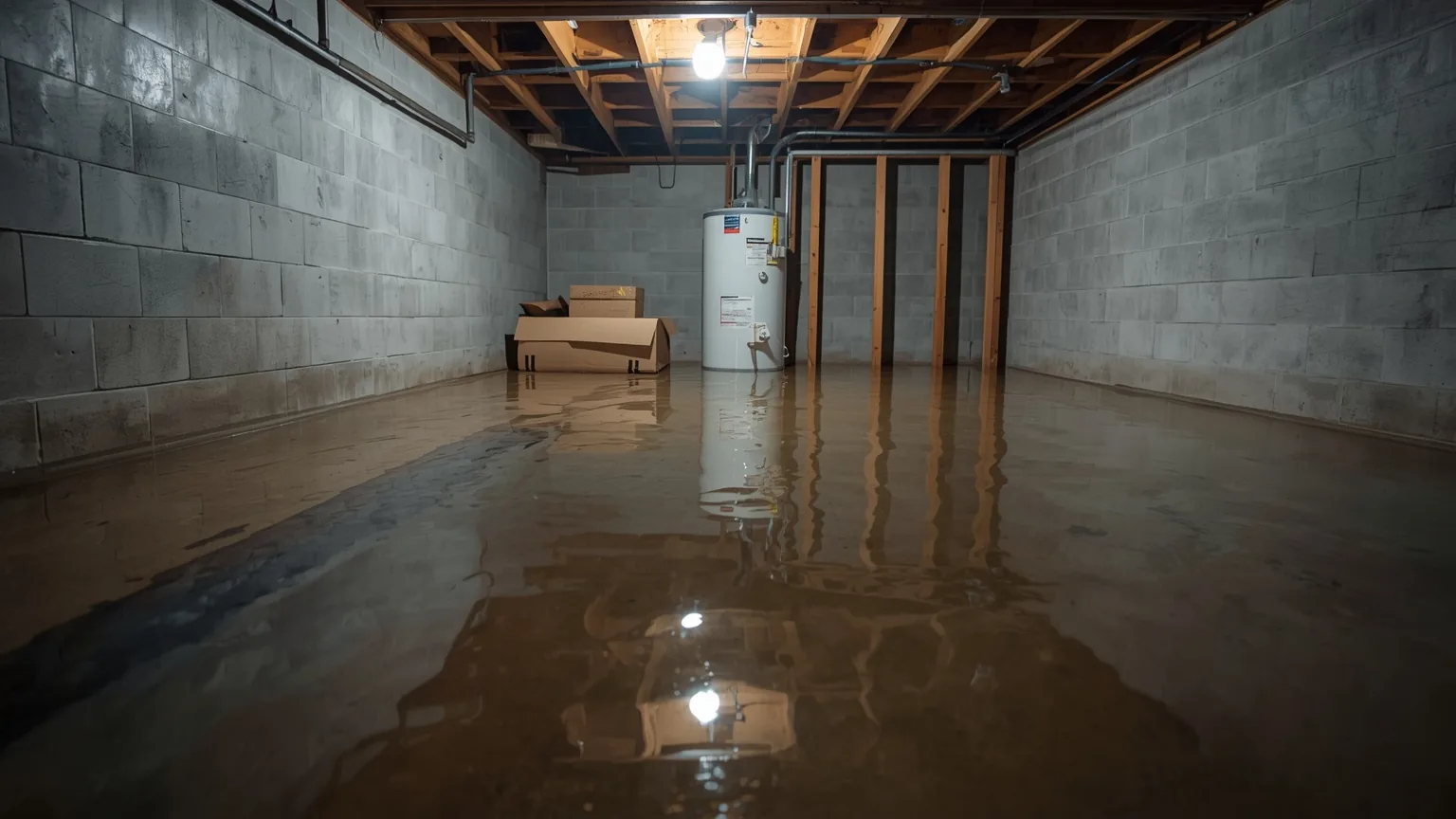
Who handles flooded basement cleanup in Green Bay, WI?
Green Bay Basements responds to flooded basements across Green Bay and Brown County — extraction and drying first, then diagnosis and permanent repair of the entry point that caused it. Call (920) 545-4548.
- Typical cost: $3,000–$12,000 in Brown County
- Soil: Kewaunee-Manawa-Poygan — silt over 5–20 ft of red lake clay, poor drainage
- Frost depth: 48" — footings and discharge lines must sit below it
- Code: Wisconsin Uniform Dwelling Code (SPS 320-325), administered by the Department of Safety and Professional Services
- Service area: Green Bay and 9 surrounding counties, 45-mile radius
First hours
Power first. If water is anywhere near outlets, the panel or a furnace, kill the circuits before you step in — and if the panel itself is threatened, that call goes to the utility rather than to you. Standing water in a basement with live circuits is the one part of this that can kill you.
Then get it out and get air moving. Standing water saturates drywall, insulation and framing by the hour, and everything porous it touches has a short window before it has to be removed rather than dried. Photograph everything before you move it — Wisconsin's Real Estate Condition Report under Wis. Stat. ch. 709 will ask you about known water intrusion when you sell, and a documented, remediated event reads very differently from an undocumented one.
Then the cause
In Brown County the overwhelming majority of March and April floods are one of three things: a sump pump that failed or lost power during the thaw, a discharge line frozen solid so the pump ran against a closed pipe, or meltwater sheeting toward the house across frozen ground that could not absorb a drop of it.
The third is the one people miss. Frozen ground is effectively pavement. Snow that would infiltrate in October runs across the surface in March, and it runs downhill toward the lowest opening it can find — which is very often a window well or a walkout door. Cleaning up without establishing which of the three happened guarantees a repeat next spring.
Why Brown County soil drives this
Brown County sits on the Kewaunee-Manawa-Poygan soil association — a thin silty cap over calcareous red clay laid down as lake sediment by Glacial Lake Oshkosh and the Green Bay Lobe. That red clay runs roughly 5 to 20 feet thick across most of the county and is among the least permeable material a foundation can be built into.
The Manawa and Poygan members of that association are rated somewhat poorly and poorly drained — they hold water near the surface instead of passing it down, so a wet spring loads the outside of a foundation wall for weeks at a time rather than days. A saturated clay backfill can exert well over 1,000 lb of lateral force per linear foot against a block wall — enough to bow an 8-inch wall inward with no visible cause outside.
The Fox River mouth and the bay shore keep the water table shallow across the lower East and West sides, and the flat lake plain gives water nowhere to run once the clay above it has taken all it can hold. In the older core neighborhoods the problem compounds — green bay's older neighborhoods — astor, whitney park, navarino, olde north — are dominated by pre-1940 housing on block or rubble foundations built before drain tile was ever required.
Flooded Basement Cleanup questions
What should I do first when my basement floods?
Kill power to the affected circuits before entering — and call the utility rather than approaching the panel yourself if water is near it. Then extract the water, get air moving, and photograph everything before you move it. Anything porous that sat in water has a short window before it has to come out rather than be dried.
Does homeowners insurance cover a flooded basement?
Usually not. Insurers treat groundwater and surface water as maintenance rather than a sudden event, and standard policies exclude both. A burst supply line is typically covered; snowmelt through a window well is typically not. Some carriers sell a sump-failure or water-backup endorsement separately, which is worth asking about specifically before the spring.
How fast does mold start?
Growth can start within 24 to 48 hours given moisture and something organic to feed on. In a cold Green Bay basement it can be slower to appear and slower to smell, which is misleading — the colony is establishing whether you can smell it or not. Drying aggressively in the first two days is what decides whether this becomes a remediation job.
Why did my basement flood when the pump was working?
Almost always the discharge, not the pump. A line that freezes or that runs uphill with no fall means the pump can be running perfectly and moving nothing. The other common version is a pump correctly sized for rainfall and badly undersized for a week of sustained thaw. Check the discharge outlet first — if it is buried in a snowbank or iced shut, you have your answer.
Related emergency services
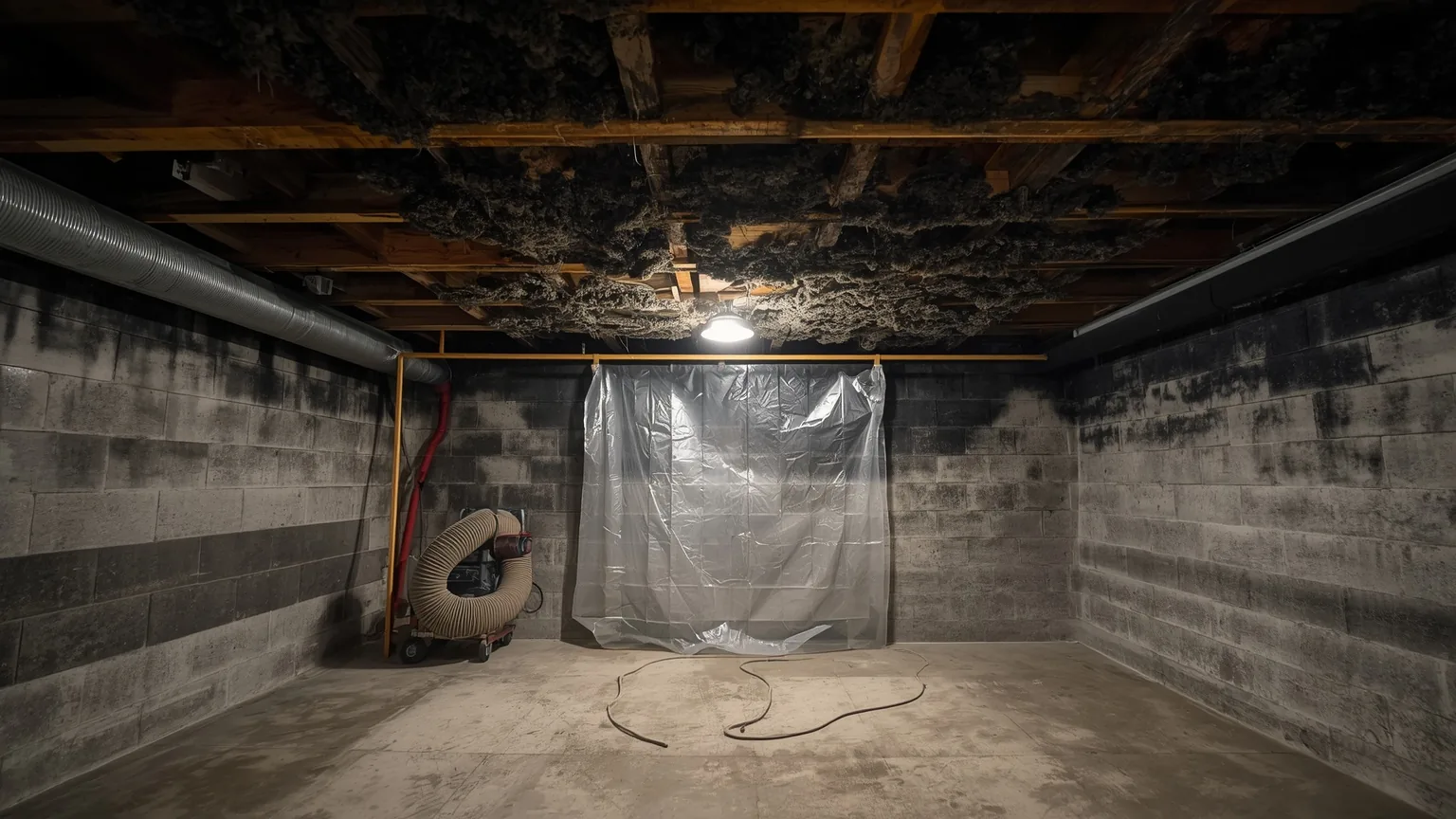
Basement Mold & Odor
A cold Wisconsin basement hides the smell most of the year. Then the house closes up for winter, the stack effect turns on, and something that has been growing since April becomes a January problem upstairs.

Water After Rain
How long after the rain the water shows up is the most useful free diagnostic you have. In Green Bay there is a third pattern too — water during the thaw, with no rain at all.
Find out what's actually causing it.
A free on-site inspection and a written scope — before any work is quoted.